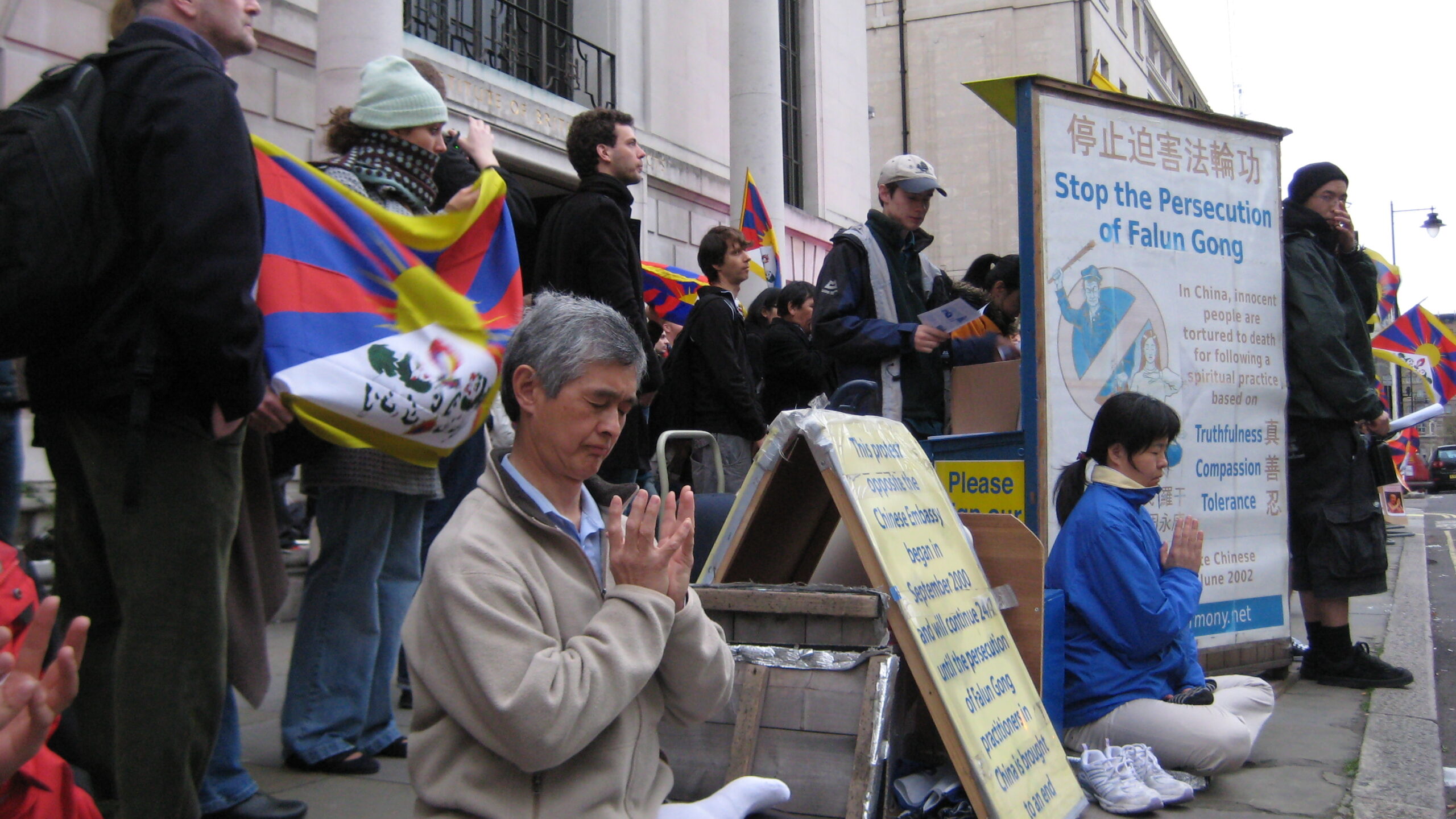
At three in the morning inside a makeshift media production room, the monitors hummed with that specific high-pitched whine that eventually replaces your inner monologue. I had been awake for the better part of forty-eight hours, sustained entirely by adrenaline, cheap instant coffee, and the terrifying certainty that if the print deadlines slipped, cosmic history would somehow stall. Ad revenue had plunged, half the distribution routes across Sydney were failing, and my physical body was executing a very tidy, quiet collapse.
When I brought this administrative shambles to local leadership, foolishly expecting a conversation about operational logistics or extra bodies, the response was delivered with that serene, unblinking smile unique to the truly enlightened.
There was nothing wrong with the workflow, I was informed. There was nothing wrong with running people into coronary events on zero pay. The problem was my heart.
My thinking was unaligned, my frustration was merely karmic filth bubbling to the surface, and my bodily exhaustion was a personal moral failure. If I had truly eliminated my attachments to comfort and self-interest, eighty hours a week of unremunerated panic would feel like floating on a lotus leaf. In the cosmic ledger of saving sentient beings, questioning the roster was functionally indistinguishable from treason.
That exchange is the entire architecture of spiritual bypassing reduced to a boardroom consultation.
The phrase itself was coined by the psychologist John Welwood to describe how individuals use spiritual ideas to sidestep raw psychological wounds. It is a tidy enough diagnosis for someone using meditation retreats to avoid dealing with a divorce. But inside high-demand groups, spiritual bypassing is not a personal coping strategy. It is an institutional survival weapon.
The machinery of high-demand organisations requires an enormous amount of free fuel. To keep human beings grinding themselves to dust without mutiny, the group must hijack everyday language and invert reality. Words like karma, purity, compassion, and divine mission become blunt-force instruments. They are deployed systematically to sanitise systemic exploitation, neutralise scrutiny, and rebrand plain organisational incompetence as celestial necessity.
Coercive control is rarely a matter of locked gates or physical intimidation. Its most lethal iteration is linguistic and psychological: turning unpaid manual labour into spiritual refinement, exhaustion into spiritual endurance, and legitimate dissent into moral decay. Over fourteen years inside Falun Gong, having already spent my childhood marinating in the esoteric rigours of the Fourth Way movement, I watched intelligent, capable adults surrender every shred of critical agency simply because their misery had been given a cosmic upgrade.
When exploitation is successfully repackaged as enlightenment, suffering stops being a warning signal. It becomes the entire point.
Reframing Exploitation as Cultivation
Inside high-demand organisations, there is no such thing as standard employment. The moment daily toil is dragged into the realm of the sacred, the secular world’s rather quaint notions of fair pay, reasonable rosters, and weekends off vanish into thin air. In their place arrives an exquisite administrative sleight of hand: the complete rebranding of industrial output as personal salvation.
In Falun Gong, this trick turns entirely on the concept of cultivation. Borrowed from centuries of Chinese ascetic tradition, the word sounds noble, meditative, and appropriately ancient. You are told it means scraping away dirty human attachments, surviving moral trials, and refining your consciousness until you reach spiritual perfection. In the actual engine room of the movement, however, it serves as an open-ended operational mandate. When a group decides to construct a worldwide media operation, run international television networks, and mount global stage spectacles, the single most troublesome line item on the spreadsheet is always labour. If you have to pay journalists, graphic designers, typesetters, and ad reps market rates, your global crusade goes bankrupt by the second quarter.
By redefining operational drudgery as spiritual refinement, leadership solves that budgetary inconvenience overnight.
The system operates on three distinct, beautifully sinister levers:
1. The Annihilation of Boundaries
If laying out broadsheet pages or cold-calling local businesses is not a job but your personal ladder to the heavens, drawing a boundary is treated as a moral failing. In a normal office, asking for overtime pay or reasonable shift lengths is basic self-preservation. In the movement, asking for money proves you are hopelessly attached to material wealth. Asking for eight hours of sleep demonstrates that your physical comfort matters more to you than the eternal destiny of the human race. To point out that a roster violates basic biological limits is merely proof that your ego is screaming for attention. The only acceptable response to an impossible task is to nod, swallow the bile, and redouble your devotion.
2. Burnout Rebranded as Purification
When human bodies are subjected to relentless physical and cognitive strain, they eventually misfire. In the rational world, heart palpitations, chronic migraines, and sudden dizzy spells are clear signs that someone ought to go home and lie down. In a high-demand group, these breakdowns are granted a cosmic promotion. Pain is not the result of thirteen-hour graveyard shifts on a broken swivel chair; it is negative karma being blasted out of your cellular makeup. Mental exhaustion is not clinical burnout; it is an illusion cast by demonic interference trying to keep you from spiritual triumph. Collapsing over a keyboard ceases to be an organisational scandal. It becomes proof that the cosmic furnace is doing its purifying work, and anyone complaining about it is simply showing bad taste.
3. The Trap of Accumulated Sacrifice
The longer you endure this routine, the more difficult it becomes to step back and assess the arithmetic. Every relationship surrendered, every career opportunity abandoned, and every sleepless night behind a glowing monitor is a psychological payment that cannot be refunded. To pause and admit that the newspaper was just a poorly managed ideological bullhorn, staffed by exhausted volunteers and propped up by paranoia, would require confronting an unbearable truth: that you gave the best years of your adulthood to a bureaucratic machine that viewed your destruction as a cheap operational cost. It is vastly less painful to convince yourself that the sheer magnitude of your misery is proof of its cosmic value.
This machinery did not ensnare me because I was uniquely naive. I had arrived with my mental plumbing already pre-configured. Having grown up inside the Fourth Way community at Sherborne House, my baseline for what constituted a normal existence had been thoroughly skewed from infancy. I had been steeped in an environment where suffering, emotional friction, and rigorous internal struggle were celebrated as the only valid tools for awakening a dormant soul.
When I entered Falun Gong’s media apparatus decades later, the punishing hours and relentless self-denial did not trigger alarms. They felt familiar, like slipping into an old, scratchy coat. The organisation simply stepped into an ideological groove that was already cut deep into my psyche. It demanded total surrender, cloaked its corporate dysfunction in esoteric terminology, and congratulated me for running myself into the dirt.
Under such conditioning, an employer has no need for physical coercion. The workforce polices itself, locked in a perverse competition to see who can sacrifice the most, sleep the least, and embrace total personal ruin with a serene, uncomplaining smile.
Karma and the Weaponisation of Guilt
Every commercial enterprise eventually runs into a quarter where the numbers do not add up. In the mundane corporate world, a catastrophic drop in revenue triggers uncomfortable meetings, forensic audits, and perhaps the quiet sacking of an incompetent marketing director.
Inside a high-demand propaganda operation, reality is arranged rather differently.
When our print advertising collapsed, or when thousands of freshly minted broadsheets sat rotting in cardboard boxes because the volunteer distribution network had suffered an administrative nervous breakdown, no one audited the spreadsheets. Leadership did not re-examine market viability or concede that printing hundreds of thousands of unsolicited newspapers might be an eccentric business model. Instead, the financial deficit was run through a celestial currency exchange.
The problem, we were told with immaculate solemnity, was karma.
Specifically, it was our collective karma. The advertising sales representatives had failed to sign local car dealerships because their cultivation state was unrefined. The phone calls had gone unanswered because the salespeople had harboured impure thoughts about their rent payments, thereby allowing dark dimensional interference to poison the minds of prospective clients. If the distribution van broke down on the motorway, it was not due to an overdue oil change; it was because the driver had entertained resentment towards a coordinator the previous Tuesday.
This is the psychological engine that makes high-demand groups so remarkably durable: the total, relentless inversion of accountability. Practical failures engineered by leadership are externalised into spiritual crimes committed by the rank and file.
In traditional religious contexts, karma is a vast, metaphysical framework governing cause and effect across lifetimes. Inside a modern high-demand group running a global media machine, it becomes a blunt instrument of corporate management. It functions as a celestial line of credit that only flows in one direction. When a project succeeds, it proves the sublime wisdom of the leadership and the miraculous intervention of the cosmos. When a project crashes, it is proof of your lingering filth.
The genius of this setup lies in the self-policing loop it creates.
To survive inside the machine, you must learn to pre-emptively execute your own critical faculties. If you feel a wave of bone-deep fatigue after three consecutive twenty-hour days, you cannot simply say, “I am exhausted and this roster is unworkable.” To articulate that observation is to acknowledge an attachment to your physical body. Worse, it suggests you lack faith in the cosmic mission of saving sentient beings. You immediately internalise the exhaustion as a character defect. You scold yourself for failing to endure. You sit on the floor, cross your legs, and attempt to burn through the invisible debt that is making your eyelids droop.
Questioning operational strategy becomes entirely unthinkable. If you notice that an editorial line is paranoid, or that a promotional budget is vanishing into opaque private accounts, pointing it out is not treated as helpful whistleblowing. It is identified instantly as a symptom of demonic interference. The group informs you that your doubt is not your own thought at all; it is a spiritual virus, an external entity whispering malice into your ear to derail your salvation.
You are left in an inescapable catch-22:
- If you agree with the leadership, you are safe, exhausted, and celebrated as an obedient disciple.
- If you disagree with the leadership, your disagreement is itself undeniable clinical proof that your mind is contaminated with bad karma.
The more glaring the group’s administrative blunders become, the harder you must work to purge the cognitive dissonance from your own brain. You do not demand better management; you demand greater suffering from yourself. You double your hours, cut your sleep down to four hours, and apologise to the universe for having noticed that the ship is sinking.
By turning guilt into an institutional currency, the organisation converts every member into their own full-time warden. The leadership never has to monitor your thoughts. You are already sitting alone at your desk at four in the morning, weeping into an empty coffee mug, begging the heavens to forgive you for wondering why the newspaper cannot simply pay its electricity bill.
Isolation Disguised as Purity
To keep a workforce functioning on starvation wages and cosmic hysteria, you must solve a tricky environmental problem: what to do about the outside world.
If your exhausted disciples take a Sunday afternoon off to visit their families, drink a beer with an old school friend, or read an unapproved book, there is a dangerous chance that normal reality might leak back into their skulls. A sensible mother might glance at her hollow-eyed son, notice he has lost twelve kilograms while cold-calling carpet cleaners for free, and say, “Darling, you look terrible, and these people are exploiting you.”
That single sentence is an existential threat to a high-demand group. To neutralise it, the organisation does not need to build compound walls, seize passports, or patrol the perimeter with guard dogs. Physical barriers are crude, expensive, and attract unwanted attention from local councils and immigration authorities.
Instead, the leadership builds a far more sophisticated quarantine inside the member’s mind. They do this by sanctifying isolation, rebranding social alienation as spiritual purity, and dressing up standard administrative paranoia as divine hygiene.
In the cosmic hierarchy of Falun Gong, the secular world is not merely an indifferent place where people go to work, pay their taxes, and mow their lawns. It is a collapsing, morally bankrupt sewer. You are taught that modern human society has slid into terminal degeneration, an abyss where ordinary people wallow in base desires, blinded by ignorance and rotten with karma.
Against this apocalyptic backdrop, the group casts itself as the sole ark of salvation. Within the group lies the pristine field of the righteous law; outside lies an ocean of spiritual contamination.
Once you accept that premise, the systematic pruning of your personal life stops feeling like an administrative purge. It begins to feel like common sense.
The Quarantine of the Mind
The process begins with a subtle, patronising realignment of how you view everyone you have ever known.
Non-believers are given a specific label: “everyday people.” The term sounds benign enough on the surface, but inside the culture, it carries an icy, unspoken condescension. Everyday people are viewed with an unsettling mixture of missionary pity and clinical revulsion. On one hand, you are told you must burn yourself out to save them, because if you fail to hand them a flyer or persuade them to watch your state-sponsored dance extravaganza, they will be eliminated in the coming cosmic cleansing. On the other hand, their minds are considered toxic waste dumps.
Their conversations are filled with ordinary human concerns: weekend plans, office politics, mortgages, films, romantic heartaches. In the eyes of the group, these are not harmless diversions. They are low-level dimensional traps. If you listen to your sister complain about her husband, or listen to your flatmate discuss his job, you are allowing their dense, karmic filth to seep into your clean energy field.
Gradually, a quiet revulsion takes root. You find yourself sitting at family dinners feeling like an undercover anthropologist dropped into a leper colony. You smile politely across the table, but inside, you are recoiling from their jokes, their attachments, and their petty secular ambitions. You tell yourself you have outgrown them. You convince yourself that your rising disgust is proof of your spiritual evolution, rather than what it actually is: an engineered inability to relate to basic human life.
The Transmutation of Loving Concern into Demonic Attack
The most diabolical trick of spiritual quarantine occurs when the people who love you attempt to stage an intervention.
In the real world, when your parents, your partner, or your oldest friends express alarm at your lifestyle, they are displaying natural human affection. They see you sleeping four hours a night, giving away your savings, and sacrificing your health for a newspaper nobody buys, and they try to pull you back from the cliff edge.
Inside the group, this care is inverted through a simple doctrinal pivot: family members who object to your devotion are no longer viewed as your relatives. They have been co-opted. They are being manipulated by negative cosmic entities to test your determination.
If your mother weeps and begs you to leave the Sydney warehouse and come home for Christmas, she is not merely missing her child. Her tears are reclassified as demonic interference. The dark dimensional beings know you are on the cusp of celestial elevation, the logic goes, and so they are pressing your emotional buttons, using your earthly mother as a convenient puppet to drag you back down into the mud.
This simple doctrinal manoeuvre accomplishes several things at once:
- It renders you utterly immune to compassion. The more genuinely heartbroken your family appears, the more convinced you become that the cosmic enemy is throwing everything it has against your resolve.
- It reframes cruelty as a spiritual duty. To be cold, dismissive, or completely silent towards your family is no longer rude; it is a courageous act of defending the cosmic law. You steel your heart, offer a flat, detached lecture about how they do not understand the higher truth, and walk out the door.
- It shifts the blame onto the victim. If your family becomes frantic and threatens legal action or contacts the press, the group pats you on the shoulder and says, “Look at the trouble your uncultivated human sentiments have caused. You have stirred up evil because your own heart was not firm.”
You are left in a state of absolute psychological isolation, surrounded only by people who applaud you for severing your own emotional limbs.
The Artificial Village
Once the outside world has been thoroughly pathologised, the vacuum must be filled. This is where the machinery of the total institution takes over completely.
You move into group houses with six other practitioners, sleeping on thin mattresses in drafty rooms, sharing bulk bags of rice, and waking up before dawn to stand in city parks. You take an unpaid or sub-minimum-wage position inside the group’s printing presses, television studios, or sales offices. Your working hours stretch to seventy, eighty, or ninety hours a week.
When you are not cold-calling advertisers or laying out pagination templates, you are sitting in mandatory group study sessions, reading the exact same lectures over and over again until the leader’s syntax permanently replaces your own vocabulary.
You no longer watch films. You do not listen to secular music. You do not read external news, except to scour it for stories that confirm the group’s apocalyptic prophecies. Your entire social, professional, economic, and moral universe contracts until it is no wider than the conference table in the media room.
The genius of this closed loop is that it disguises itself as liberation. You do not feel imprisoned; you feel sheltered. You look around at the frantic, commercial chaos of the city outside and feel a smug sense of relief that you have been chosen to dwell in the pure land, untainted by the moral rot of the degenerated age.
What you have actually entered is an airtight echo chamber where reality has been carefully murdered and buried under a mountain of metaphysical jargon.
When everyone sitting around you nods solemnly at the idea that flying saucers are harvesting human organs, that natural disasters are tailored punishments for politicians who refused to endorse a flyer, or that a dropped ad contract is the result of dark dimensional warfare, you nod too. There is no longer anyone left in your life to raise an eyebrow and ask, “Are you listening to yourself?”
By the time the isolation is complete, the group does not need to tell you what to think. You have voluntarily cut the wires connecting you to the rest of the species, and you will defend the cage that holds you because you have been taught to call it heaven.
Breaking the Spell and Reclaiming Reality
Waking up from an ideological trance does not happen in a blaze of cinematic enlightenment. There is no swelling soundtrack, no dramatic epiphany where the clouds part and common sense descends like a dove.
Instead, it begins with an unbearable, grinding friction.
You spend years desperately filing down the jagged corners of reality so they fit inside the group’s celestial doctrine. When the printing press breaks down, you blame your thoughts. When an editor suffers a breakdown, you blame their karma. When you cannot pay the electricity bill because your stipend was swallowed by an international dance tour, you close your eyes and meditate until the panic recedes. You become an Olympic-level gymnast of the mind, performing backflips of rationalisation just to keep the mythology intact.
The turning point arrives when the accumulated weight of the absurdity simply crushes the machinery of belief.
For me, the crack in the porcelain was not a grand philosophical dispute. It was the simple, insulting realisation that the cosmic emperor had no clothes, only an insatiable appetite for unpaid labour. It was looking across a boardroom table at a senior coordinator attributing an administrative catastrophe to evil spirits, and realising, with sudden, terrifying clarity, that the man was simply incompetent.
Once that single thread is pulled, the entire celestial tapestry unravels with alarming speed.
If a dropped advertising contract is merely the result of bad sales technique, then the hours you spent repenting on a meditation cushion were a waste of time. If physical exhaustion is just biology screaming for mercy, then your chronic illness was not a purification; it was neglect. And if the organisation is capable of lying about its balance sheets, it is entirely capable of lying about the cosmos.
Recognising that you have spent fourteen years acting as an unpaid propagandist for a corporate autocracy is not a gentle experience. It feels like stepping off the edge of a tall building. The group spent over a decade systematically convincing you that outside their perimeter lay spiritual annihilation, a moral void where degenerated souls drift towards destruction. To walk away requires you to voluntarily step into that supposed void, fully prepared to be erased.
What you discover on the other side, however, is not destruction. It is merely the quiet, untidy magnificence of ordinary life.
Reconstruction is not a neat, linear progression. Reclaiming personal autonomy after more than a decade of high-demand conditioning is slow, clinical work. You have to rebuild your identity from the foundation up, unpicking the borrowed syntax that was planted in your brain and learning how to think without asking the universe for permission. You have to learn how to feel tired without feeling guilty, how to make mistakes without fearing cosmic retribution, and how to look at human vulnerability without reaching for a metaphysical band-aid.
Spiritual bypassing promises an elevator ride straight to heaven, provided you surrender your critical faculties at the door. It offers the intoxicating illusion that you can transcend suffering by simply ignoring reality. Genuine autonomy is found in the opposite direction. It is found down here in the dirt, in the messy, unscripted world of doubt, accountability, and independent thought.
Leaving the group was not an act of falling from grace. It was the moment I finally woke up and started living.
Want to read more about the mechanics of coercive control?
My forthcoming memoir, Saving Sentient Beings: A Career in Global Propaganda, offers an unflinching, insider account of fourteen years spent inside the media and propaganda apparatus of Falun Gong. To receive exclusive early previews of upcoming chapters, archival documents, and essays on post-cult recovery, join the launch list here.