The spare bedroom in dad’s council flat in Islington was a vertical slice of domestic archaeology that smelled permanently of ancient newsprint and loose-leaf Earl Grey. Outside the sash window, the London drizzle fell in grey sheets, blurring the red-brick terraces across the street into a smudged charcoal drawing. Inside, the cast-iron radiator clanked an erratic rhythm against the skirting board, sounding like a dying boiler trying to clear its throat.
I sat on the edge of the single bed, shivering under a thin synthetic blanket, listening to my father potter about in the kitchen. Robert George Gibson, known to his children as “The Rock”, moved with the deliberate, heavy-footed cadence of an Edinburgh schoolmaster who had spent six decades refusing to negotiate with the physical universe. His internal weather system was set to permanent Presbyterian gloom. He had survived a violent childhood in a Scottish tenement flat, ducking brass fire pokers, only to spend his twilight years sitting bolt upright in the double-lotus position on cold pavements outside the Chinese Embassy, attempting to cleanse the cosmos through sheer obstinacy.
Down the hallway, the kettle whistled, followed by the clink of a heavy ceramic mug. He was brewing another tea, completely indifferent to the fact that his middle son was unravelling in the next room.
I was thirty-two years old, entirely broke, and running on absolute fumes. Eight months earlier, the international aviation machinery had spat me out onto the tarmac at Heathrow with nothing to my name except a suitcase of wrinkled clothes and the lingering biological aftermath of the Singapore deportation relay. That particular farce had seen me bouncing from an undercover sting in an oversized borrowed suit to a subterranean holding cell at Changi, escorted across the Tasman under the watchful eye of an Australian Air Marshal, locked in an Auckland drunk tank overnight, and finally exiled back to the mother country.
The movement’s senior practitioners assured me that being dragged through four sovereign border controls like a low-rent arms dealer was simply a magnificent opportunity to eliminate black karma. Master Li’s cosmic algebra was remarkably convenient in that regard: whenever an operation collapsed into a shrieking catastrophe, it was not organisational incompetence, it was your own dirty karma burning away. If you starved, if you were arrested, or if your nervous system shattered into jagged shards, you were supposed to look inward, search your thoughts for hidden attachments, and quietly thank the living Buddha for purifying your dimensional body.
My dimensional body, unfortunately, was staging a violent strike against solid food.
My gut was completely wrecked. Ever since the subcontinental dysentery of my twenties, my digestive tract had operated like a suspicious border guard, but the sheer, vibrating panic of the post-Singapore fallout had pushed it over the brink. Solid food felt like swallowing broken bricks. Bread sat in my gut like an anvil, meat triggered cold sweats, and vegetables merely passed through untouched, waving as they went.
So I surrendered to the yoghurt protocol.
The fridge in Dad’s kitchen, usually a sparse desert containing half an onion, a jar of budget yeast extract, and a bottle of milk, was now colonised by plastic tubs. Discount plain yoghurt, bought in bulk from the local supermarket. No sugar, no fruit, no indulgent vanilla flavouring: just sour, white lactic paste. It was the only substance my inflamed lining would tolerate without screaming.
Every few hours, I shuffled out of the bedroom, pried off a blue plastic lid with a shaking thumb, and shovelled three cold spoonfuls into my mouth. It tasted like chilled plaster, but it required no chewing, produced no culinary friction, and possessed the singular virtue of staying down. I stood by the sink, scraping the bottom of the tub with a teaspoon, feeling the bitter cold slide into my ribs.
I was an anointed spiritual foot soldier, tasked with saving the universe from imminent destruction, running entirely on cultured dairy and desperate willpower.
My nervous system felt like a five-hundred-volt cable that had been severed with garden shears and dropped into a puddle. I was barely sleeping. When I closed my eyes, my brain immediately started cycling through border interrogation rooms, the faces of Singaporean secret police, and the terrifying grin of human rights lawyers chanting in Hindu temples. When I opened them, I was back in Islington, staring at the peeling cornicing while the radiator hissed.
On the small timber desk beside the bed, my white iBook hummed softly, its internal fan screaming under the strain of dial-up connection speeds. The screen cast a sterile, bluish rectangle across the wallpaper.
By late May 2007, I had taken to updating my Facebook status with the flat, deadpan cadence of a condemned man tracking the weather.
holding onto reality by a thread, I typed one morning, staring at the little blue banner on the screen.
Nobody replied, which was fair enough. The civilian population on social media was busy sharing photos of weekend brunch, arguing over pop music, and organising after-work pints. They had no frame of reference for an exhausted thirty-something holed up in North London, convinced that psychic demons were interfering with his broadband while he scraped fermented milk out of a plastic bucket.
A few weeks later, my gastrointestinal defiance reached its ideological peak. I sat over the keyboard, feeling the cold weight of my dad’s silence bleeding through the plasterboard, and posted the administrative update: mostly eating yoghurt today.
It was meant to be funny, but the humour was pitch-black. The contrast between our cosmic propaganda rhetoric and the squalid reality of daily life was impossible to ignore. In the lavish pages of the broadsheet we were supposed to be distributing, we were brave, principled warriors exposing global tyranny, noble figures in sharp suits standing up to Beijing. In the spare room in Islington, I was an unemployed wreck in an unwashed jumper, wondering if my kidneys were packing up because I had jogged two miles down the canal just to escape my own skull.
The real sickness, though, was not the dysentery or the starvation diet; it was the total erasure of my own identity.
When you spend years inside a high-demand apocalyptic cult, the first thing they systematically dismantle is your internal compass. You are taught that your personal desires, your instincts, your doubts, and your boundaries are filthy, selfish attachments that belong to the ordinary mortal world. If you feel hurt, you are wrong. If you feel terrified, your faith is weak. If your body collapses, your karma is dirty. You are trained to treat your own psyche as hostile territory that requires constant, brutal suppression.
The end result is an absolute, terrifying vacuum. Without the dogma dictating what to think, who to talk to, and how to breathe, you cease to function. You become an empty vessel waiting for external instructions.
That was how the honesty box arrived.
Facebook had just introduced third-party applications, a parade of primitive widgets designed to keep bored university students clicking away. One of them was the “Honesty Box”: a little digital container you could pin to your profile, inviting anyone on the internet to send you completely anonymous feedback. No names, no email addresses, just raw, unvarnished commentary delivered straight into your inbox.
To a healthy mind, installing an honesty box is a mild, slightly narcissistic curiosity. To an exhausted disciple whose self-worth had been scraped out with a rusted spoon, it was a desperate plea for coordinates.
I had spent years being evaluated by movement coordinators who measured my spiritual purity by how many hours of free labour I could cough up, how many newspapers I could hoist into a van, and how stoically I could ignore my own deteriorating organs. I had no idea who I was anymore. I did not trust my own judgment, my own emotions, or my own sanity.
So, sitting on the edge of the mattress with the cloying sourness of supermarket dairy coating my tongue, I clicked the button to embed the widget, opened the digital floodgates, and typed out my status update: asking for anonymous comments in his Facebook ‘honesty box’.
I was literally outsourcing my soul to the digital ether. Having been stripped of an ego by an authoritarian master, I was now turning to strangers on the internet, begging them to throw pebbles against the glass to tell me if I was a decent person, a wretched failure, or simply a ghost haunting an Islington flat.
Downstairs, the front door rattled open and shut. Dad was leaving for his shift at the protest, his footsteps heavy and unhurried on the tiled floor outside. The silence rushed back in, heavy and suffocating, thick with emotional anticipation.
I scraped another spoonful of white sludge from the plastic tub, swallowed the sour paste without tasting it, and refreshed the browser, waiting for an anonymous voice to tell me how to exist.
The screen flickered, casting a dead, blue pallor across the unwashed floral wallpaper while the internet remained completely silent. No anonymous saviour was queuing up to drop enlightenment into a text field. The only real certainty in the room was the sour coating of cultured dairy clinging to my teeth and the unmistakable sound of my own clock running down. I was a trained graphic designer with an immaculate commercial portfolio, reduced to shivering in a single bed like an ecclesiastical orphan while my dad brewed endless loose-leaf tea down the corridor. Hiding behind an iron radiator in North London was not cleansing my dimensional body; it was merely postponing the bailiffs.
If the universe was not going to send instructions through a Web 2.0 widget, I had to manufacture my own coordinates. The logic of the movement had already hollowed out my critical faculties, leaving behind a manic, stubborn reflex: whenever reality threatens to crush you, double down on the grandiosity. The problem was not the message, I told myself, nor was it the messiah who insisted that computers were alien parasites designed to harvest human organs. The problem was the sheer, amateurish embarrassment of the British operation. If the local disciples looked like tea-stained drifters handing out smudged leaflets to unimpressed commuters, it was simply because nobody had bothered to apply proper branding, professional typography, and corporate scaffolding.
I dragged my emaciated frame out from under the synthetic blanket, pulled on a fresh jumper, and packed the white iBook into my backpack. I would trade the passive starvation of the bedroom for active financial self-immolation. I had a plan. I was going to haul the Master’s propaganda apparatus out of the Chinatown gutters and drag it kicking and screaming into modern commerce. All we needed was a legitimate headquarters, a formal London address where Western thought leaders could be courted and the revolution could be properly invoiced.
Finding commercial premises on the city fringe in the East End was not a search for light or air; it was an exercise in matching our subterranean psychology with a physical perimeter. We bypassed the polished corporate towers of the City and hunted through the frayed edges of Tower Hamlets until we hit Wentworth Street, a narrow arterial strip where the exhaust fumes of commercial vans mingled with the sweet, oily residue of Brick Lane curry houses. The real estate agent handed over the keys with the flat indifference of a man offloading an industrial hazard.
The office situated underground at Unit LG 2 at 88-94 Wentworth Street was an architectural practical joke played on the concept of human commerce.
Unit LG 2 at 88-94 Wentworth Street was an architectural practical joke played on the concept of human commerce.
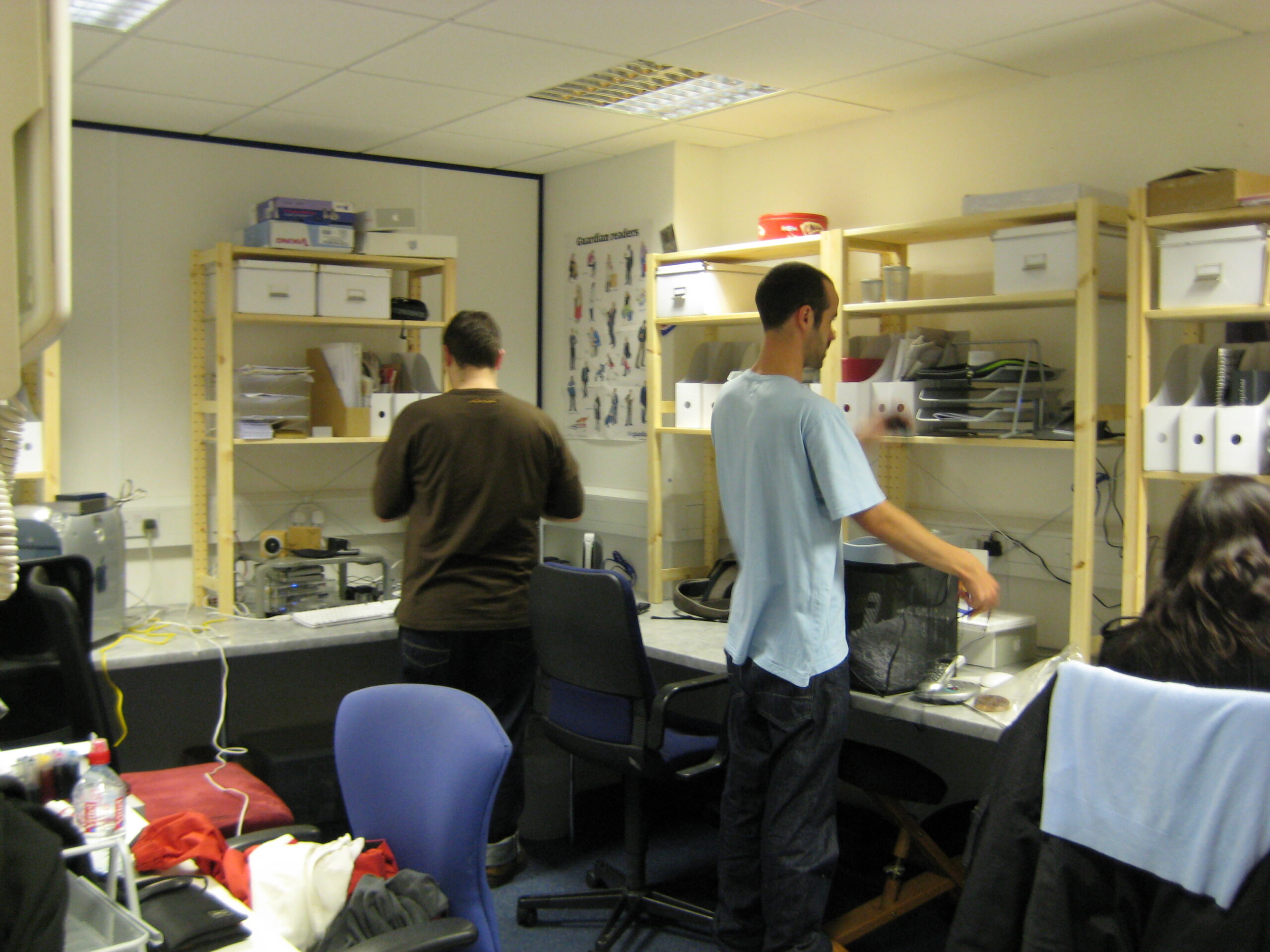
To reach the nerve centre of the newly overhauled British media apparatus, you turned off the frantic, curry-soaked slipstream of Brick Lane, pushed past the discount textile wholesalers of Shoreditch, and descended a flight of cold stone stairs into the earth. The basement reeked aggressively of cured concrete, stale industrial floor sealant, and forty years of groundwater pooling silently against subterranean brickwork. There was no natural light. The daylight had been entirely replaced by twin banks of suspended fluorescent strips that buzzed at a dull, fifty-hertz drone, bathing the entire room in the jaundiced pallor of a hospital mortuary during a power cut.
This was the bunker where we were going to conquer the British establishment.
My transition from an agoraphobic invalid living on supermarket yoghurt in my dad’s spare room to the General Manager of a national broadsheet had not been marked by medical recovery, divine epiphany, or a modest injection of common sense. It had been engineered by sheer commercial panic and a profound, stubborn delusion.
Years earlier, when the movement’s New York leadership first floated the idea of launching an English-language print operation, I had pushed back hard. I was a professionally trained graphic designer; I had created promotional collateral for major film studios, and I possessed a passing familiarity with the laws of economics. I had argued passionately for a slick, monthly China-analysis magazine. A glossy magazine could carve out an elite niche, establish authority on human rights, court western thought leaders, and, crucially, turn a profit from the very first issue.
The proposal had been packaged up during a hot-box session with other would-have-been-founders in Queens, and presented directly to Master Li Hongzhi at his upstate New York compound. The Creator of the Universe had flatly dismissed my entire commercial rationale with a wave of his hand. He insisted it had to be a daily, mainstream broadsheet capable of directly challenging and eventually replacing The New York Times. This was the first time I would disagree with the Master, another large sizeable rock of doubt in my spiritual backpack to weigh me down.
When an infallible deity who claims he can walk through walls decides to take a personal punt on print media during the terminal decline of Fleet Street, you do not argue about balance sheets. You snap to attention and prepare to incinerate cash.
By mid-2007, the UK English edition of The Epoch Times was in its customary state of catastrophic operational arrest. Up until that point, the entire enterprise had been run like a chaotic church bulletin staffed by well-meaning zealots who handed out smudged copies to bewildered shoppers in Chinatown. Nobody was paid, the printing debts were held together by frantic personal donations, and the editorial pipeline was a disaster of broken translations and unchecked Dunning-Kruger syndrome.
I convinced myself that the entire catastrophe was merely an infrastructure problem. The solution, I decided, was capital and proper corporate scaffolding.
The resulting war chest was not conjured out of thin air; it was a joint venture in sacred financial self-immolation. I put in half of my own cash, scraped together from commercial design contracts and my ethical marketing agency that had been humming along quite nicely. The matching half came from Vasilius Zoupoundis, a Swedish millionaire practitioner who owned a sales company in Malmö called Sales Competence. I had done graphic design work for him in Sweden, and he fancied himself an astute commercial heavyweight who could spot an undervalued asset.
We met at the Fa conference in Warsaw that year. Vasilius backed me to the hilt. He nodded solemnly over the projections, entirely convinced that pairing Nordic sales discipline with my branding skills would transform the Master’s propaganda tract into a self-sustaining commercial engine. Later, of course, when the entire house of cards collapsed into a heap of debt, internal betrayals, and administrative recriminations, Vasilius would turn on me with blistering fury. He would brand me an unmitigated failure and swear that he would never invest in me again. But in the summer of 2007, we were two anointed crusaders with sixty thousand pounds each, ready to show Fleet Street how spiritual titans ran a newspaper.
Because high-demand religious movements possess a profound allergy to conventional charity laws, direct corporate financing required creative accounting. We devised a workaround: rather than handing over a direct cash gift, I used my business Three Lotus Media to purchase 50% worth of advertising space directly in the newspaper for 6 months.
With that single, ruinous financial stroke, we leased the Shoreditch basement, wired in broadband, and attempted to play at being real press barons.
I outfitted the front-of-house distribution couriers in crisp uniforms to replace the shabby, tea-stained anoraks of the local devotees. I set up proper desks, invested in a new Mac for our main designer, and had a stack of thick, matte business cards pressed on pristine cardstock. They read: Jaya Gibson, General Manager, The Epoch Times (UK Edition), Unit LG 2, 88-94 Wentworth Street, London.
Holding that card between my thumb and forefinger, with its sophisticated typography and formal London phone numbers, it was remarkably easy to ignore the fact that the commercial enterprise underneath it was a hollowed-out hallucination.
The physical space reflected that exact madness. Unit LG 2 was divided into two distinct zones: the operational desk area and the paper mountain. At the back of the room, stacked ceiling-high against the raw concrete walls, sat twenty thousand unsold copies of the previous week’s run. Newsprint possesses a specific, dry, chemical odour when stored in bulk in a windowless cellar; it smells of drying petroleum ink, wood pulp, and impending bankruptcy. Whenever the heavy street-level doors opened upstairs, a wave of traffic grime from Commercial Street drifted down the stairwell, settling like a layer of fine soot across the monitors and the towers of unread broadsheets.
I sat at my laminate desk, nursing a paper cup of lukewarm instant coffee, while Martin Croucher, an earnest honest to goodness reporter who genuinely believed in journalistic integrity, hammered away on a keyboard three feet to my right. Martin had recently taken to the internal UK Dafa email lists to badger our remote-working editors to drag themselves online to finish their pages, desperately hoping to manufacture some semblance of fleet-footed camaraderie out of thin air.
Across from us sat Lee Hall, our Production Manager, whose primary role in the editorial chain seemed to consist of issuing arbitrary tactical commands from the West Midlands via our proprietary internal chat software Sonnant.
Then there was the distribution fleet, which was an entirely separate layer of comic misery. We did not possess our own fleet of delivery vehicles; that sort of capital outlay was far beyond our reach. Instead, we were entirely dependent on the battered commercial van operated by the Chinese practitioners who distributed the Chinese-language edition, Da Ji Yuan.
This vehicle was a rattling, rust-eaten shite-box on wheels that smelled of fermented bean paste, cold sweat and existential dread. Coordinating logistics with the Chinese executive team was nothing short of a complete diplomatic indignity. The Chinese-language paper was the golden child, the sacred cultural trunk of the operation, while our English edition was treated like a clumsy, uninvited Western appendage.
Our bundles of English broadsheets were routinely shoved into the grotty footwells, squeezed beneath teetering stacks of the Chinese edition, or flatly ejected onto the wet tarmac when the Chinese drivers decided their own distribution quotas took cosmic priority. The van ran on a timetable dictated by divine inspiration rather than the laws of London traffic. It broke down with agonising regularity, shedding bits of exhaust along the A11 or failing to start because its starter motor was choked with grime.
Whenever the van gave up the ghost on a delivery run to our steel distribution boxes outside the West End tailors, newsroom management did not ring the Automobile Association. Dialling a commercial recovery service would have indicated a catastrophic failure of faith. Instead, an urgent alert would ripple across the internal UK email network, commanding every disciple in Greater London to drop their tasks, sit cross-legged on whatever carpet was nearby, raise their right hand in the air, and send forth righteous thoughts (FZN) for fifteen solid minutes.
The rationale was delivered with absolute seriousness: the vehicle had not stalled because it was an overstressed piece of junk with three hundred thousand miles on the odometer. It had stalled because invisible demonic legions had swarmed the chassis, terrified that our editorial pages were about to liberate the souls of Soho. The demons had physically manifested inside the alternator to prevent the truth from reaching the British public.
I would sit at my desk in the Shoreditch cellar, rubbing my eyes under the flickering tubes, looking at a room of grown adults murmuring ancient Chinese incantations to spiritually purge a clogged fuel injector, and wonder how a graphic designer had managed to dig himself into this particular corner of the universe.
Vasilius was in Malmö checking his sales graphs, John Tang was in New York waiting for us to surpass the mainstream press, and we were running a slow-motion administrative train wreck five metres underground.
I picked up the landline, dialled the commercial printers in Watford to beg for another forty-eight hours of credit on our maxed-out ledger, and watched the soot settle silently over my immaculate new business cards.
Managing the Shoreditch newsroom felt like trying to run an air traffic control tower staffed entirely by people who believed gravity was an optical illusion.
On paper, I was the General Manager. I had leased the concrete bunker on Wentworth Street, wired in the broadband, and bought the furniture. Simon Veazey, our Editor-in-Chief, sat across from me, trying to construct a legitimate editorial workflow with Martin. But real authority in our world did not flow from job titles, commercial contracts, or the amount of capital injected into the company ledger. It flowed from an invisible cocktail of spiritual seniority and unadulterated cosmic entitlement.
Every unpaid practitioner who drifted down the stone stairs into our basement had been told by Master Li that they were an ancient galactic monarch who had descended into the human sewer to burn off black karma. When they achieved full enlightenment, they were destined to ascend and rule their very own private cosmic paradise.
The practical consequence of trying to run a commercial enterprise with a dozen sovereign deities was an unrelenting encounter with the Dunning-Kruger effect. Why should a future supreme god of the universe care about print deadlines, bleed margins, or the mundane physics of display advertising? Whenever I attempted to enforce a basic commercial discipline, my directives sailed straight over their heads. Secular business metrics were dismissed as the dirty habits of ordinary everyday people.
If a sales target was missed or our accounts slipped deeper into the red, the newsroom leadership did not audit our distribution routes or evaluate our pitch. That would have been entirely too worldly. Instead, they diagnosed the problem as a spiritual defect. It was our collective cultivation state that was lacking. We had not purged our minds of hidden attachments; we had harboured selfish desires; or worse, we had failed to execute enough hours of Sending Righteous Thoughts to disintegrate the demonic entities swarming through the lower dimensions of East London.
This metaphysical madness found its daily battleground on the UK Falun Dafa email group. The email threads were an ongoing archive of bureaucratic hysteria and ideological policing.
The primary lightning rod was Michael Milton, a veteran London devotee whose correspondence was an exquisite mixture of passive aggression, bruised vanity, and apocalyptic dread. Mike had taken it upon himself to patrol the streets of London like an unappointed bishop, and every administrative hiccup was framed as a direct victory for the Chinese Communist Party.
When our distribution operatives removed a steel newspaper box from outside a bespoke suit company in the West End, Mike erupted across the group chat. He accused the management of sabotaging the grand mission to save sentient beings, insisting that influential city gentlemen were personally weeping over the absence of their weekly copies. Simon Veazey ordered him to stand down and stop posting disputes to the entire British membership, only for other practitioners to jump into the fray, quoting Master Li’s lectures about obedience back at Mike like rival monks trading scripture in a draughty monastery.
Then came the legendary canine crisis.
The production team put a striking photograph of a snarling dog on the front page to illustrate a government announcement regarding dangerous breeds. To a normal newspaper editor, it was a standard piece of front-page layout designed to catch the eye of commuters. To the self-actualised gods of the UK branch, it was an unforgivable spiritual sabotage.
Tony Chen quickly fired an urgent dispatch into the group on behalf of a senior practitioner named Yunxia Wang, who had been organising teams to hand out copies in Wales. The message was breathless: they were attempting to flog tickets to the divine Shen Yun dance spectacle in Cardiff, and this horrifying hound on the cover was frightening the Welsh public and polluting their pure field of energy.
Mike immediately piled on, claiming the snarling dog was degrading our noble broadsheet into a vulgar tabloid, dragging us down to the gutter level of the Sun or the Daily Star. He demanded to know why we were splashing Reuters wire copy across the cover after management had claimed our articles were entirely original reporting.
Lee, typing from Birmingham, had to wade into the digital mud to explain the bleeding obvious. He pointed out that every broadsheet in Fleet Street, including The Guardian, had run a similar dog picture because that was the news of the day, dryly adding that anyone claiming to have seen the identical story a week earlier must have possessed a crystal ball inside Whitehall.
I would sit in front of my screen in the Shoreditch basement, scrolling through dozens of frantic emails debating whether a picture of an Alsatian was secretly working for Beijing to ruin dance ticket sales in Cardiff, rubbing the grit from my eyes, entirely numb.
The absurdity deepened whenever the conversation turned to class and geography. The movement had become completely intoxicated by Master Li’s mandate to target mainstream society. On the ground, this quickly fermented into raw, unadulterated snobbery.
During Shen Yun promotional runs, practitioners routinely revolted against being assigned to working-class suburbs. One devotee sparked an internal row after complaining about leafleting in Croydon, openly asking why they could not target suburbs where people actually had money, concluding that the locals in Croydon simply did not look like they deserved saving.
Another practitioner leafleting houses near Heathrow had fretted that the residents lacked the necessary wealth, declaring that according to Buddhist theology, poor people lacked virtue and were therefore unworthy of hearing the universal law. Saving sentient beings was the glorious slogan printed on our corporate banners, but behind closed doors, salvation was strictly by invitation only, subject to a spotless credit rating and an acceptable postcode.
Whenever these ideological disputes spilled over into logistical gridlock, practical problem-solving was firmly off the table.
If the shared delivery van broke down, if the print run was delayed, or if an office laser printer jammed its rollers with cheap paper, the entire room was ordered to drop everything and sit on the floor. We would cross our legs into the lotus position, lift our right hands with fingers straight, and spend fifteen minutes muttering ancient incantations to exorcise the mechanical hardware.
We had completely professionalised the outer shell of the organisation. We had the business cards, the Shoreditch address, the corporate incorporation documents, and a mountain of debt. But inside the engine room, the enterprise was wholly run by people who believed they were exempt from reality.
I opened our online banking portal, stared at the balance draining away like water through a broken bucket, and listened to the clatter of keyboards around me as the future rulers of the cosmos resumed their holy war over newspaper drop-boxes.
If you wanted to understand the operational architecture of the movement, you only had to look at who was allowed to touch the chequebook and who was ordered to stand in the rain holding a banner.
To the outside world, the public display on the pavement stood as a triumph of multicultural devotion. The brochures featured glossy photographs of smiling Westerners sitting in neat rows in Hyde Park, legs pretzelled into the full lotus, radiating wholesome European serenity. We were marketed to Fleet Street and Westminster as an innocuous, multi-ethnic spiritual renaissance anchored in Truthfulness, Compassion, and Forbearance.
Down in the bunker, the racial mathematics were somewhat more direct.
The movement was governed by an absolute theological caste system. In Master Li’s cosmic blueprint, the heavens were strictly segregated along ethnic borders. The yellow race enjoyed a sprawling, prime celestial territory described as the Buddha-world and Tao-world, a boundless spiritual domain that filled almost the entire universe. The white race, by contrast, had been allocated a modest spiritual pocket handkerchief, a tiny celestial corner reserved exclusively for Caucasian souls. Race-mixing was characterised in the scriptures as an abomination of the Dharma-Ending Period, a degenerative physical corruption that severed a soul’s connection to its designated racial heaven.
Naturally, we did not print that particular cosmic insight on our recruitment leaflets. Selling celestial apartheid to the British public would have been a public relations disaster, so it was publicly brushed under the carpet and rarely discussed openly in the group.
On the ground in London, this theology crystallised into an impenetrable cultural wall. Western practitioners were viewed by the Chinese inner circle as spiritually unrefined barbarians. We were uncultivated, emotionally messy outsiders who were tolerated only because our white faces served an indispensable functional purpose: we were the respectable Caucasian window dressing.
Whenever an official letter had to be lodged with a Member of Parliament, a Western disciple was drafted to polish the syntax. Whenever a press release was dispatched to the national news desks, a Western name had to be slapped across the contact details. When we needed to front a human rights delegation or convince an aristocratic arts patron to take a brochure for Shen Yun, they shoved a polite, well-spoken Westerner into a tailored suit and pushed him into the spotlight.
We were the front-of-house public relations assets, manufactured to make an authoritarian, messianic sect look like an organic British human rights initiative.
Williamson YuYu, one of the influential Chinese coordinators, laid out this transactional arrangement with breathtaking clarity across the internal email lists. After a group of Western adherents spent their nights drafting formal political lobbying templates, Williamson offered his effusive praise, noting that he was deeply grateful to the Western practitioners for writing the sample letters and hoped they would continue providing this linguistic service so the Chinese practitioners could generate far greater political impact. The subtext was impossible to mistake: keep writing our correspondence, keep smoothing our rough edges for Whitehall, and remember your place in the foyer.
The moment the conversation turned to editorial authority, organisational strategy, or the movement of money, the iron curtain dropped with a definitive thud.
The true command structure bypassed the local British committee entirely. Directives did not emerge from our Shoreditch newsdesk; they were handed down from the upstate New York compound at Dragon Springs via an exclusively Chinese executive layer. Dana Cheng, the chairperson of the English Epoch Times, functioned as the direct ideological pipeline connecting the New York leadership to our local desks. She and John Tang ran the international enterprise with absolute, non-negotiable authority, communicating instructions that were treated as literal divine decrees because they originated from Master Li himself.
We were supposed to be running a collaborative media hub, working alongside the Chinese edition, Da Ji Yuan. In practice, the Chinese management viewed the Western team with undisguised suspicion. They flatly refused to share financial details, withheld strategic decisions, and would not even coordinate their daily delivery routes with our van drops unless they were backed into a corner. We were two completely segregated operations existing in the same physical space, divided by language, theology, and an utter lack of reciprocal trust.
Whenever a Westerner had the temerity to question this dynamic or express genuine distress over the isolation, the leadership deployed a ruthless brand of spiritual gaslighting.
Mike spent months pouring his heart into the UK group chat, detailing the systemic condescension inflicted upon Western disciples. He noted the quiet indignity of being openly referred to as a “foreigner” by Chinese immigrants on British soil, observing with bitter weariness that wherever Chinese practitioners gathered, they simply reconstructed China around themselves, leaving the locals stranded on the outside. Mike was desperate for honest communication, writing agonizing appeals for basic mutual respect.
The response from a senior Chinese coordinator was just psychological humiliation. During a public meeting, the coordinator openly sneered at Mike, mocking his earnest emails as nothing more than a pathetic plea of “Please love me and be my friend”. Mike was told he was ungrateful to the group, lacking in discipline, and profoundly lucky that the Master even permitted him to assist with the promotional work.
Within our hermetic culture, raising an administrative grievance was immediately treated as a moral failing. If you felt excluded, you were attached to human emotion. If you pointed out an operational absurdity, you were clinging to your ego. If you objected to being treated like an errand boy after sinking tens of thousands of pounds into the company, you were failing to raise your moral character.
The management systematically weaponised the doctrine against anyone who dared ask for a functional partnership. You were commanded to look inward, eliminate your attachments to fairness, and thank the people who mistreated you for providing a precious opportunity to purge your black karma.
The clash between Western autonomy and the movement’s demand for absolute submission made our group meetings utterly surreal.
Once a week, we would gather for group study, sitting on the cheap polyester office carpet among the stacks of broadsheets. The Westerners would sit in polite, rigid silence, terrified of speaking from the heart because genuine vulnerability was always pounced on as spiritual weakness. Instead of open discussion, people recited rigid, prefabricated scripts, desperately imitating the austere, unquestioning cadence of the Chinese coordinators.
Mike lamented on the group chat that our meetings had degenerated into sterile performances, where disciples simply quoted approved testimonies instead of engaging in authentic reflection. We had completely hollowed ourselves out to conform to a standard of obedience that was utterly foreign to us.
We had convinced ourselves that by sacrificing our time, our careers, and our independent judgment, we were building an enlightened alliance of East and West to save the world. The grim reality was far more mundane. We were just the unpaid, disposable workforce of an overseas political machine.
I sat at my desk, looking through the glass partition at the front office. A delivery of fresh Shen Yun flyers had just arrived from the printers, featuring soaring celestial maidens bathed in synthetic gold light. Outside the door, two young Western disciples were already loading heavy cardboard boxes onto hand trolleys, preparing to spend twelve hours pounding the pavement to hawk tickets to the British political class.
Upstairs in New York, the Chinese leadership was balancing the accounts and deciding which parts of the message we were allowed to understand. Down here in the basement, we had the business cards, we had the liability, and we had the privilege of paying for our own exploitation.
The final unraveling of Three Lotus Media did not arrive with a visit from Her Majesty’s Revenue and Customs, nor did it trigger an indignant audit from Companies House. It arrived via the hollow crackle of an international telephone link hooked up to upstate New York in the dead hours of a freezing London morning.
By September 2007, our subterranean experiment on Wentworth Street had reached the terminal velocity of its financial delusion. Just before you entered the bunker beneath Brick Lane you would catch the occasional waft of a jalfrezi just before you descended into the signature perfume of printer toner and wet masonry. We were haemorrhaging money worse than an axe wound.
My own investment scraped together from legitimate commercial graphic design contracts and my ethical marketing agency, had been thoroughly digested by commercial lease deposits, telecom connections, and print bills from Watford. Vasilius’s matching funds was close behind. The Swedish sales tycoon had backed our operation with supreme Nordic certainty, convinced that pairing my branding experience with the cold metrics of his Malmö enterprise, Sales Competence, would transform the Master’s propaganda tract into an unassailable commercial juggernaut.
Instead, we had built an unheated daycare for self-actualised demigods.
The paper mountain at the back of the room grew taller with each passing week, towering over our laminate desks like an ominous papier-mâché landslide. Unpaid devotees continued to treat basic commercial directives as low-level mortal distractions beneath their spiritual status, preferring to spend their working hours waging ferocious flame wars across the internal group chat over drop-boxes outside Savile Row tailors or whether front-page photographs of snarling dogs were sabotaging theatre ticket sales across Wales. The battered white delivery van borrowed from the Chinese edition remained stranded on double-yellow lines across the West End, its blown alternator and flat battery regularly treated not by a mechanic with a spanner, but by circles of devotees sitting cross-legged on the pavement, projecting righteous thoughts to purge unseen demons from the transmission casing.
We had completely professionalised the outward shell of the company. We had the pristine business cards, the Shoreditch address, the corporate incorporation certificate, and a cosmic sized amount of hubris. But the engine inside was built out of pure, unadulterated zeal, and paper mills do not accept karmic virtue in lieu of sterling.
Then, the international executive layer decided to intervene.
John Tang, the software engineer who founded the newspaper’s original American incarnation, alongside company president Stephen Gregory, suddenly noticed our independent setup across the water. Up until that point, the movement’s central leadership had been perfectly content to let Western disciples empty their savings accounts to pay for commercial press runs. But Three Lotus Media was an independently registered British limited company. It held the commercial lease on Wentworth Street. It owned its equipment. It controlled its own bank accounts.
To an authoritarian hierarchy that demands absolute, unquestioning submission to the celestial throne at Dragon Springs, independent legal scaffolding was an intolerable threat.
The phone calls from New York began trickling in well past midnight. John Tang and Stephen Gregory were clinical, smooth, and utterly devoid of human empathy.
“No, no,” the American voices told me over the speakerphone, speaking with the icy detachment of senior party apparatchiks inspecting a rogue provincial outpost. “It has to be one company. Everything must be brought under central control.”
I sat alone at my desk in the bunker, gripping the telephone handset with white knuckles, staring out across the empty rows of secondhand furniture and the silent monitors.
“If we dissolve Three Lotus Media, the money is gone,” I argued, trying to inject the basic principles of British contract law into a dialogue governed by cosmic fiat. “The money is tied up in company assets, prepayments, and prepaid advertising space. If I step down and hand over the assets, I lose all my capital. Vasilius loses his entire investment. We both get completely wiped out.”
The response across the Atlantic was a flat, administrative shrug. They did not care about the money. They cared even less about our personal balance sheets. In the esoteric calculus of the leadership, our life savings were not a legitimate corporate investment; they were merely material attachments that had conveniently served their purpose of carving out a physical bridgehead in London.
Then came the punchline, delivered with the breathtaking, unblinking audacity unique to apocalyptic cult leadership.
“Can’t you just step down as CEO,” they suggested with utter seriousness, “and then just carry on running the operation anyway?”
It was a cynical clinic in psychological extraction. They wanted the corporate vehicle dissolved, they wanted the executive authority stripped, they wanted the personal capital permanently incinerated, and then they wanted me to remain in the basement as an unpaid, disposable clerk, sweating seventy hours a week to keep the printing presses turning for free.
I stared at the telephone receiver, listening to the emptiness on the other end of the line, feeling the last remaining threads of corporate optimism snap clean in two.
“That is insane,” I said, my voice bouncing sharply off the concrete walls. “That is simply not going to work.”
The New York leadership did not bother to debate the point. They simply closed the fist. The corporate vehicle was dismantled, local autonomy was revoked, the operational lines were pulled back under the unilateral control of the New York board, and the Fleet Street Putsch was concluded without a single drop of physical blood.
The personal fallout was immediate and venomous. When the house of cards collapsed, Vasilius Zoupoundis did not direct his fury at Master Li’s upstate court or the cynical apparatus that had swallowed our funds. He directed it straight at me.
The Swedish tycoon erupted in bitter recrimination, violently declaring that I was an unmitigated failure who had bungled his grand commercial expansion, swearing with absolute finality that he would never invest in me again.
I did not have the stamina to argue with him. My bank balance was completely hollowed out. The financial cushion I had spent years accumulating through commercial design work had vanished into the movement’s bottomless administrative furnace.
Sitting alone in the bunker late that evening, the reality of my predicament settled over me with clinical clarity. Setting up an office, leasing desks, pressing thick business cards, and pouring my own cash into the machine had not made the enterprise legitimate. It had merely tightened the noose.
The movement had not failed to understand business; it was actively hostile to it. A functional, profitable, legally sound corporate entity requires transparency, shared governance, and real financial accountability. The cult required none of those things. It required an endless conveyor belt of exhausted, compliant devotees willing to burn through their personal wealth, ignore their deteriorating health, and surrender their critical faculties, all while convincing themselves that their exploitation was merely the celestial burning of dirty karma.
I reached over and flicked the main switch on the wall, killing the fluorescent banks. The bunker dropped into total darkness, the humming tubes dying with a sharp, fading snap.
I climbed the cold stone stairs, pushed through the heavy street doors, and stepped out onto Wentworth Street.
Out on the pavement, the East London drizzle was falling in cold, greasy sheets, washing the street grit into the gutters and turning the asphalt into a black mirror. The British commercial dream was dead, our war chest was gone, and my personal credit was ruined. My gut was still raw, my nervous system was vibrating like an overloaded transformer, and my pockets were entirely empty.
Yet, in the perverse logic of the machine, this catastrophe was not the exit. It was merely the preamble.
Up in upstate New York, the leadership was already preparing their next move. Within months, the apologetic overtures would begin, offering new postings, higher international titles, and a fresh opportunity to perform my devotion on the global stage. Having systematically stripped me of my capital and broken my commercial independence, the cult had me right where it wanted me: bankrupt, isolated, and entirely dependent on the machine for my coordinates.
I zipped my jacket against the biting chill, pulled my chin down into my collar, and walked slowly toward Aldgate East tube station, heading back to my father’s flat, wondering how many more times I was going to let these people rob me blind before I finally found the sense to walk away.