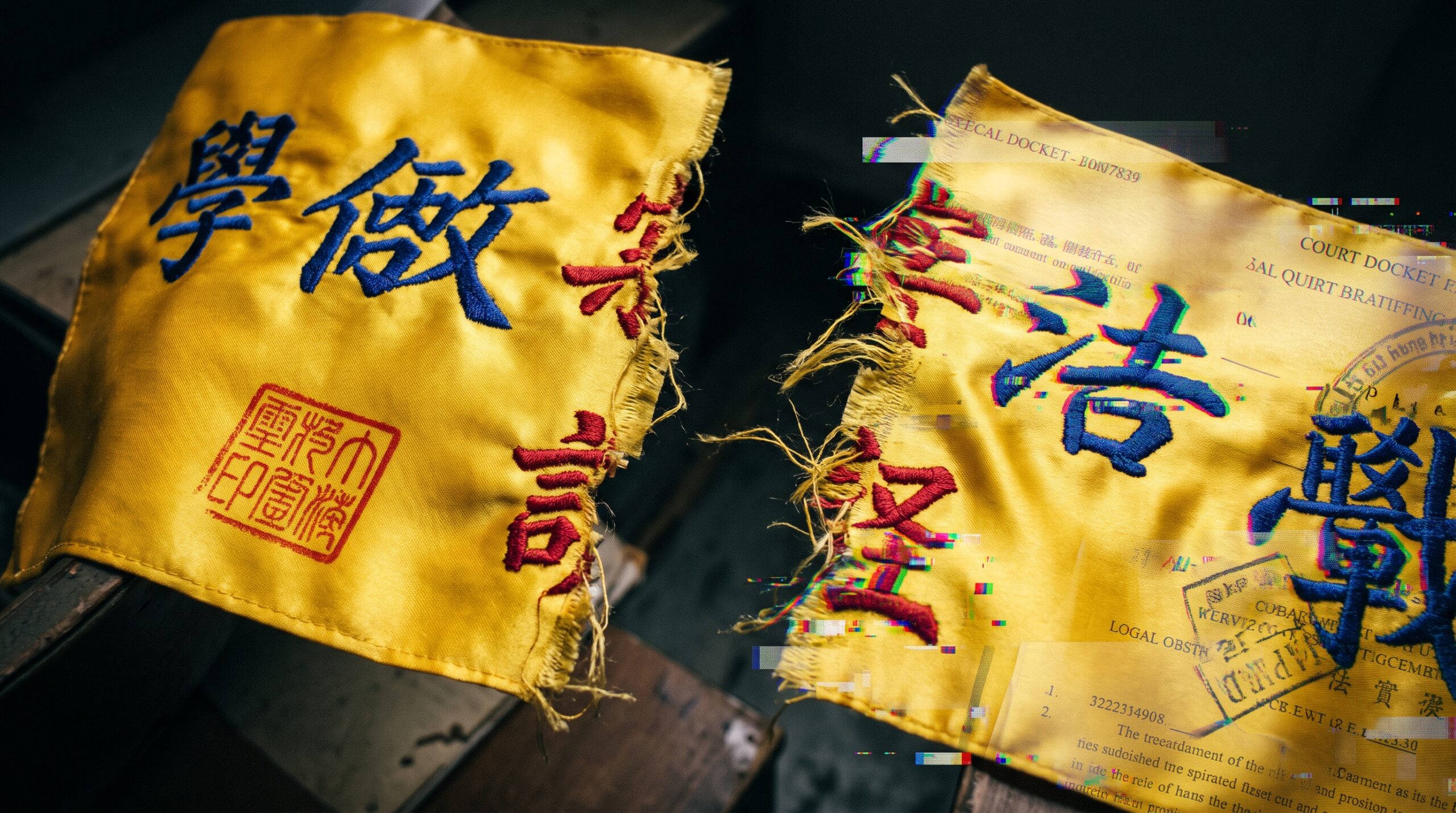
Popular depictions of high-control religious movements typically conjure up images of remote rural compounds, matching uniforms, or devotees chanting around a fire. In reality, contemporary sectarian organisations frequently operate as sophisticated, highly monetised corporate networks.
For decades, the overseas apparatus of Falun Gong presented itself as a peaceful community of meditators performing gentle exercises in city parks, preserving ancient Chinese heritage, and highlighting human rights abuses committed by Beijing. Behind that public-facing exterior, however, sits an international corporate empire spanning television channels, digital video platforms, global publishing houses, and performing arts companies with hundreds of millions of dollars in assets.
For years, the movement preserved an ironclad internal discipline. Following directives from founder Li Hongzhi, adherents were commanded to submit unconditionally to appointed regional and project coordinators, treating any criticism of management as a spiritual defect. Yet the wall of silence has begun to fracture. A dissident website run by active practitioners, FalunHub, has begun publishing internal documents and whistleblowing exposés that reveal deep unrest across the movement’s North American leadership.
Remarkably, these internal dissidents have even turned to leaking their material anonymously to expelled former members like myself. Although these practitioners still adhere to their spiritual tenets and reject my public criticism of the group, their willingness to leak documents across that divide demonstrates an unprecedented breakdown of trust. They are attempting to bypass the group’s internal censorship to challenge regional autocrats whom they accuse of manufacturing divine authority and mismanaging collective resources.
This internal fracturing is not merely an esoteric dispute over theological purity. Mainstream observers and regulatory bodies have little reason to dissect internal arguments about who is correctly following the spiritual teachings. What matters to the public is the paper trail: tens of millions of dollars in Canadian public arts funding awarded to private entities, multi-million-dollar property acquisitions, charity deregistration by tax authorities, and a 67 million dollar federal money laundering indictment in the United States. When an authoritarian movement enters the commercial marketplace, collects public subsidies, and directs vast sums through private channels, it must be evaluated on its corporate governance, workplace practices, and financial transparency.
The 67 Million Dollar Question and “Master’s Word”
The corporate transformation of Falun Gong’s flagship media properties was not driven solely by organic reader support or grassroots anti-communist sentiment. In June 2024, federal prosecutors in the United States District Court for the Southern District of New York unsealed a criminal indictment against Weidong “Bill” Guan, the long-serving Chief Financial Officer of The Epoch Times Association. On 9 July 2026, during jury selection for his federal trial in Manhattan, Guan interrupted proceedings to plead guilty to one count of conspiracy to engage in transactions involving criminal proceeds. In doing so, he formally admitted his central role in an international money-laundering conspiracy that funnelled at least 67 million US dollars in illicit capital through the media conglomerate.
According to federal prosecutors and court filings, the operational mechanics of the scheme were orchestrated through an offshore wing known as the “Make Money Online” (MMO) team, based in Vietnam and directly managed by Guan. Beginning around 2020, scheme participants used cryptocurrency to purchase criminal proceeds, including fraudulently acquired pandemic unemployment insurance benefits, that had been loaded onto tens of thousands of prepaid debit cards and gift cards. These cards were purchased at discounted rates of approximately 70 to 80 cents on the dollar. Conspirators utilised stolen personal identification information belonging to United States residents to open bank and debit card accounts, using them to execute tens of thousands of layered transactions that swept the dirty money into corporate accounts held by The Epoch Times and its affiliates.
The financial effect on the organisation was immediate and staggering. In 2020, internal accounting showed the media company’s annual revenue surging by approximately 410 percent in a single year, rocketing from roughly 15 million US dollars to over 62 million US dollars. Guan personally profited from the flow of capital, receiving approximately 16.7 million US dollars directly into his personal bank accounts across 85 transfers between April 2020 and January 2021, and shifting millions more into personal cryptocurrency holdings while evading personal tax reporting. When FDIC-insured banks repeatedly flagged suspicious transaction spikes, including more than 1,700 automated security warnings from a single IP address, Guan lied to bank officials, claiming the funds were legitimate voluntary donations from supporters. Under his plea agreement, Guan agreed to forfeit at least 67 million US dollars, pay restitution of up to 67 million US dollars, and faces a statutory maximum of ten years in federal prison. His co-defendant on the MMO team, Le Van Hung, also entered a guilty plea to conspiracy to commit identity theft.
The indictment produced an immediate institutional panic across the movement. Within days of Guan’s initial arrest in June 2024, long-time co-founder and chief executive John Tang resigned from his positions at The Epoch Times and NTDTV. Around the same time, founder Li Hongzhi published a statement addressing the crisis, acknowledging that practitioners “not doing well” had caused trouble for the media company, while insisting that adherents must act with integrity even when trying to generate funding to resist the Chinese government.
Yet the most revealing details regarding the inner workings of the organisation have emerged through the whistleblowing articles recently published on FalunHub. According to an exposé analysing the courtroom undercurrents, Guan and his co-defendant had spent nearly two years preparing an aggressive legal defence, having spent nearly 20 million US dollars on legal representation whilst Guan lived off financial support from ordinary adherents.
The turning point that led to Guan’s sudden guilty plea was not a legal strategy devised by his lawyers. According to the leaked accounts, senior figures, including Wang Shaojiu of NTD Canada, subjected Guan to relentless rounds of persuasion at his home during the final week before his trial, visiting him in shifts from early morning until late at night. The decisive pressure came in the form of a spiritual decree: Wang told Guan that Master Li Hongzhi himself had agreed to the guilty plea. When Guan sought absolute proof, he was informed that Canadian coordinator Kevin Yang and other senior leaders “guaranteed with their lives” that the instruction came directly from the founder. Guan reportedly sent a final text message demanding verification before signing the court documents, warning that those delivering the message would be culpable if it were false, only to be told once more: “I confirm. I guarantee it with my life.”
These revelations demonstrate the total collapse of secular boundaries within the movement’s corporate leadership. In a high-control system where the words “Master said” carry supreme spiritual weight, individual legal rights, corporate fiduciary duties, and personal accountability are subordinated to autocratic decrees. By invoking divine commands to secure criminal admissions, regional leaders avoided an open trial that could have publicly exposed their wider financial network, once again using the spiritual devotion of rank-and-file members as a shield for institutional survival.
The Canadian Subsidy Pipeline and the Private Enclave
While the criminal proceedings against Weidong Guan played out in the United States, an equally significant, though far less scrutinised, financial operation was consolidating itself north of the border. High-demand sectarian organisations frequently portray themselves as entirely self-sustaining, community-driven endeavours. In Canada, however, Falun Gong’s flagship broadcasting arm, New Tang Dynasty Television (NTD Canada), developed an extraordinary facility for securing public arts funding.
According to official registers from the Canada Media Fund (CMF), between the 2010 and 2026 fiscal years, NTD Canada and its affiliated production ecosystem drew down more than 72 million Canadian dollars in public cultural funding. These public monies, distributed across approximately 295 individual television dramas, digital series, documentaries, and software projects, were awarded through the broadcaster’s designated performance and development envelopes.
The public interest question is not simply that a faith-aligned media platform accessed state grants; it is where that public funding ultimately went.
An examination of the CMF project ledger reveals a remarkable concentration of public capital. Out of the dozens of production companies drawing from NTD Canada’s broadcaster envelope, four private corporations directed by Kevin Yang, the influential coordinator who effectively runs the Falun Dafa Association of Canada, captured the single largest share of the fund. Between 2010 and 2026, Yang’s four entities (New Realm Studios Inc., New Realm Film and Video Inc., Brilliant Media Corp., and numbered corporation 2600651 Ontario Inc.) secured 16,815,199 CAD across 77 contracted projects. This single private corporate cluster absorbed roughly 23.5 per cent—nearly a quarter—of all public production funding channelled through NTD Canada over a sixteen-year span.
This funding pipeline operates via a tightly integrated operational circuit that insider dissidents are now openly challenging:
- The Broadcaster Envelope: NTD Canada acts as the licensed broadcast partner, establishing eligibility for CMF performance envelopes funded by the Canadian taxpayer.
- Commercial Commissioning: The broadcaster awards substantial production contracts to private production companies owned and operated by Yang.
- Devotional Extraction: Drawing upon his spiritual status within the Falun Dafa Association, Yang and senior leadership recruit practitioners to handle shooting, visual effects, and promotion under the banner of religious duty (“clarifying the truth”), frequently securing labour at minimal cost or entirely unpaid.
- Asset and Track-Record Consolidation: The completed media assets and broadcast credits build the requisite commercial footprint to unlock subsequent, larger rounds of state arts funding, cementing the private corporate position of these entities.
This concentration of control represents an untenable conflict of governance. When one individual simultaneously directs the regional spiritual body, serves as an executive power at the recipient broadcaster, and acts as the sole director of the private production houses collecting the disbursements, institutional checks and balances evaporate. Internal accountability becomes impossible; when adherents question how public funds are spent, their inquiries are dismissed as an “internal company matter” or crushed through pastoral authority, treating secular corporate curiosity as spiritual insubordination.
Furthermore, the public grant money is only one half of the ledger. CMF grants do not underwrite the full cost of a production; they are structured around an annual “leverage ratio,” which requires matching capital from licence fees, third-party financing, or private capital. Across the sixteen-year funding span, CMF leverage ratios ranged from 3.3 to 5.16. For the 77 projects undertaken by Yang’s four companies alone, the 16.8 million CAD in public grants required an estimated cumulative production spend of over 71.3 million CAD, creating a non-CMF matching requirement of approximately 54.5 million CAD.
This discrepancy exposes serious civic and regulatory concerns. In commercial film and television, matching obligations and provincial or federal labour tax credits are evaluated on verified payrolls and market-rate invoices. If high-budget projects were staffed by devotional volunteers working for nothing, or if rank-and-file practitioners were pressured into funding production shortfalls out of their own pockets, the accounting submitted to grant administrators becomes deeply distorted. In the words of the whistleblowers on FalunHub, if public monies and tax credits were claimed against unpaid devotional labour, regulators and the Canadian public are entitled to ask: where did the matching millions actually go, and who ultimately profited?
Real Estate Surges and Charity Deregistration
To insulate high-value assets and diffuse regulatory scrutiny, modern authoritarian movements rarely operate through a single legal entity. Instead, they erect a fragmented labyrinth of registered charities, non-profit associations, private commercial corporations, and cultural trusts. Dispersing capital across multiple corporate veils creates an opaque operating environment where funds can be transferred between secular commercial entities and tax-exempt holding accounts with minimal public visibility.
The structural vulnerability of this arrangement was starkly demonstrated in Canada. In 2025, the Canada Revenue Agency (CRA) stripped the Falun Dafa Association of Canada of its registered charity status. The revocation was not triggered by complex political intrigue, but by a failure to comply with the most fundamental statutory duty of any registered charity: completing and submitting mandatory annual information filings. For an organisation that served as the primary civic and external face of the movement in Canada, this regulatory deregistration exposed acute internal administrative dysfunction.
Public filings revealed that for nearly a decade, the association had reported negligible or non-existent donation activity. Public records showed zero donation revenues recorded between 2012 and 2020, zero in 2022, and a token 48 CAD in 2023. The sole anomaly occurred in 2021, when the charity abruptly recorded receiving roughly 836,000 CAD in donations and immediately disbursed about 837,000 CAD as “gifts to other qualified donees”.
While the titular spiritual association reported minimal financial activity, other affiliated charitable vehicles were processing millions of dollars with virtually no line-item transparency. A prime example is Plum Blossom Centre Inc., a registered charity handling between several hundred thousand and two million Canadian dollars annually. Over a seven-year reporting period between 2017 and 2024, the entity declared cumulative revenues exceeding 9.2 million CAD and total expenditures of roughly 9.0 million CAD. Official filings reveal expenditure patterns that defy standard non-profit governance:
- In 2024, the charity reported 85.1 ten thousand CAD in expenditures, with 85 per cent of its total revenue absorbed by unspecified “other expenditures”.
- In 2023, unspecified “other expenditures” accounted for 85 per cent of total revenue, consuming 161.4 ten thousand CAD.
- In 2022, unspecified “other expenditures” represented 93 per cent of revenue.
- In 2021, 95 per cent of revenue was categorised under unspecified “other expenditures”.
- In 2020, compensation expenses consumed 97 per cent of revenue, yet the filing listed no corresponding employee headcount.
- In 2018, professional and consulting fees accounted for 93 per cent of total revenue.
These expenditure categories raise serious compliance questions. For years, rank-and-file practitioners were told to direct private donations intended for Shen Yun production costs to these Canadian charitable accounts to secure tax-deductible receipts. When upwards of 85 to 95 per cent of a charity’s capital is systematically routed into vague, non-specific expense lines or consulting fees, it becomes impossible for donors or tax authorities to confirm whether charitable funds were directed to legitimate cultural performances or diverted into private corporate hands.
The opacity of these charitable balance sheets contrasts sharply with the aggressive acquisition of secular commercial real estate. In 2021, The Epoch Times Media Inc. in Canada spent 24,750,000 CAD to purchase a prominent commercial headquarters building in Markham, Ontario, located at 195 Allstate Parkway. While a mortgage of approximately 16,090,000 CAD was registered on the same day, the transaction required a cash equity outlay of roughly 8,660,000 CAD, representing 35 per cent of the total purchase price.
Over the same period, another affiliated non-profit entity, New Tang Dynasty Charities, experienced an explosive surge in assets. Declaring total assets of only about 310,000 CAD in 2021, the charity’s balance sheet swelled to 2,360,000 CAD in 2022 and reached 7,180,000 CAD by 2023. This rapid accumulation of 6,870,000 CAD in just two years culminated in the purchase of a residential five-bedroom, five-bathroom luxury property at 6 Glenbourne Park Drive for 2,958,888 CAD in March 2023. This residential address was subsequently declared as the charity’s official mailing address, raising pointed questions among practitioners as to who actually resides there and whether organizational and personal assets are being mixed.
This sudden liquidity and property expansion between 2021 and 2024 occurred during the exact period when grassroots practitioners were subjected to repetitive, aggressive fundraising drives for special newspaper print editions, and while rank-and-file volunteers lived on subsistence stipends. More critically, this Canadian real estate boom aligned directly with the timeline of the federal money-laundering conspiracy unsealed in the Southern District of New York against Epoch Times Chief Financial Officer Bill Guan, where tens of millions in illicit proceeds were layered through company accounts. When an insular sectarian empire operates across borders, moving large sums between unregulated media entities, tax-exempt trusts, and private real estate, the distinction between religious charity and commercial shadow-banking breaks down entirely.
Weaponised Introspection and the Silencing of Dissent
In high-demand movements, internal challenges to executive authority are rarely met with standard administrative review or open debate. Instead, leadership routinely pathologises procedural enquiry, converting basic governance questions into supposed proof of the questioner’s spiritual corruption. Within Falun Gong, this psychological suppression centres on the doctrine of “looking inward” (xiang nei zhao), an ideological concept originally presented as a tool for personal moral betterment and ethical self-examination. In daily practice, adherents are instructed to search their own minds for character flaws whenever they encounter interpersonal friction, administrative dysfunction, or external adversity.
In financial and organizational contexts, however, this doctrine is weaponised to eliminate internal oversight. When practitioners question missing budgets, non-transparent fundraising drives, or unilateral executive decisions, leadership immediately reframes administrative enquiry as “looking outward”. Under this closed logic, raising a concern about corporate mismanagement or the misuse of resources is treated as conclusive evidence of the questioner’s moral failure, jealousy, competitiveness, or secular greed. This dynamic creates an intense environment of self-blame and guilt, effectively forcing adherents into self-censorship while leadership maintains an outward facade of spiritual purity and institutional infallibility.
This psychological control was formalised through administrative directives. Following founder Li Hongzhi’s July 2010 directive, “Be More Diligent”, adherents were instructed to submit unconditionally to appointed regional and project coordinators, with leadership declaring that whatever a coordinator decided must be carried out without hesitation. Questioning a project head was treated as equivalent to challenging the spiritual validity of the mission itself. In regional centres such as Toronto, this top-down authority was deployed directly against internal critics. For example, Canadian coordinator Kevin Yang instructed adherents in large group settings to write down how they had examined their own spiritual shortcomings, explicitly arguing that doing so helped turn the habit of “looking outward and offering suggestions” into “content about how to look within and how to cooperate outwardly”. When veteran practitioners raised concerns as early as 2014 regarding government grant allocations, wage returns, and a lack of transparency, Yang dismissed the enquiries outright, asserting that the handling of company funds was strictly an internal corporate matter that did not require public disclosure.
When reflective introspection fails to quiet dissent, the administrative apparatus escalates to active stigmatisation and expulsion. Adherents and internal accountants who press for balance sheets or question the use of funds are branded as spiritual saboteurs, labelled as demonic “old forces”, or accused of “damaging the Fa”. In other instances, critics who scrutinise corporate funding allocations or the conduct of regional leaders are branded as external intelligence agents or government spies. By characterising financial questions as the work of enemy agents, leadership shifts the focus away from verifiable corporate accounting and transforms the whistleblower into an existential threat to the collective.
The penalties for persistence are swift and isolating. Dissenters face coordinated condemnation across communal message groups, peer ostracism, whisper campaigns, and sudden removal from media and cultural projects. In Canada, regional coordinators have publicly named and reported critical practitioners in group chats containing hundreds of members, severely damaging their personal standing. In other instances, coordinators have gathered sensitive personal information, including passport scans and travel records, establishing an atmosphere of surveillance and intimidation. If a practitioner speaks out publicly or leaves, official notices are issued warning the community to sever contact with them, cutting them off from their long-term social networks.
For veteran practitioners living in Western democracies, this administrative culture produces a bitter historical resonance. Many adherents who originally fled persecution in mainland China observe that the overseas administrative apparatus has recreated the identical thought-reform mechanics of the totalitarian system they escaped. Tactics such as pinning ideological labels on dissenting individuals, organising collective struggle sessions, demanding written self-criticisms, and enforcing social isolation mirror classic Maoist political campaigns. By subordinating transparent governance and basic labour ethics to an unchecked divine mandate, the movement ensures that commercial assets remain firmly controlled by a small circle of executives, completely shielded from the scrutiny of the devoted volunteers who helped build them.
Conclusion: The Secular Regulatory Imperative
Democratic societies have long granted authoritarian religious movements an unexamined regulatory pass, largely because corporate extraction and administrative coercion are shielded behind the banner of religious freedom and anti-authoritarian advocacy. The well-documented human rights abuses and violent suppression carried out by the Chinese party-state have historically provided Falun Gong with a protective narrative umbrella in Western capitals. In the eyes of many political figures and cultural institutions, the movement was categorised strictly as a persecuted spiritual minority, a framing that has consistently deterred critical scrutiny of its internal operations. However, as former adherents and emerging whistleblowers have observed, the genuine suffering of practitioners in mainland China cannot serve as a permanent moral indemnity for systemic exploitation in the West. Suffering persecution abroad does not confer a licence to run coercive workplaces, evade statutory filing obligations, or divert public assets into private hands.
When the metaphysical rhetoric of karmic redemption and spiritual crusade is stripped away, the observable reality is that of a transnational corporate conglomerate operating on an unsustainable governance model. The movement harvests professional capabilities, physical stamina, and private financial donations from devoted followers, converting that energy into multi-million-dollar commercial media empires, vast real estate holdings, and lucrative touring theatrical brands. When operational failures, labour abuses, or criminal conspiracies inevitably puncture this insular world, leadership systematically absolves itself by shifting blame onto the moral failings of individual devotees, demanding deeper self-censorship, or dismissing statutory enforcement as malevolent external interference.
Secular democratic institutions must abandon the misconception that investigating these practices constitutes religious intolerance. Grant-awarding bodies, such as the Canada Media Fund, have a clear legal responsibility to ensure that millions of dollars in cultural subsidies are not captured by self-dealing corporate networks that exploit unpaid or underpaid devotees while declaring market-rate production costs. Tax authorities, including the Canada Revenue Agency and the United States Internal Revenue Service, must rigorously audit registered charities whose balance sheets show erratic capital surges, vague multi-million-dollar consulting expenditures, and luxury residential property acquisitions. Concurrently, state and federal labour regulators must enforce standard workplace protections, child labour regulations, and minimum wage laws across performance companies and media studios, regardless of whether leadership labels its workforce as volunteers or spiritual students.
The fundamental principle governing civic life is that spiritual movements do not exist in a vacuum outside the law. Adherents are fully entitled to their personal beliefs, their meditative exercises, and their private theological convictions. But the moment a spiritual movement enters the secular marketplace, captures taxpayer subsidies, trades on public infrastructure, and amasses vast commercial wealth, it operates as a secular corporate entity. It forfeits any entitlement to conceal its balance sheets, its labour practices, and its administrative conduct behind a veil of divine exceptionalism.
Want to read more about the mechanics of coercive control?
My forthcoming memoir, Saving Sentient Beings: A Global Career in Cult Propaganda, offers an unflinching, insider account of fourteen years spent inside the media and propaganda apparatus of Falun Gong. To receive exclusive early previews of upcoming chapters, archival documents, and essays on post-cult recovery, join the launch list here.