Over Labour Weekend, the Christchurch Town Hall suspended its customary civic decorum to host an event of quiet, tectonic momentum: Decult 2026, convened under the banner Voices of Courage: Pathways to Healing and Justice. Across two relentless, packed days in the Limes Room, the conference gathered over fifty domestic and international speakers, hundreds of in-person attendees, and an audience streaming in around the clock from North America, Europe, and beyond. The corridors swarmed with clinicians, researchers, legal scholars, social workers, and, most critically, frontline survivors and advocates drawn from across the vast, bruised spectrum of coercive groups.
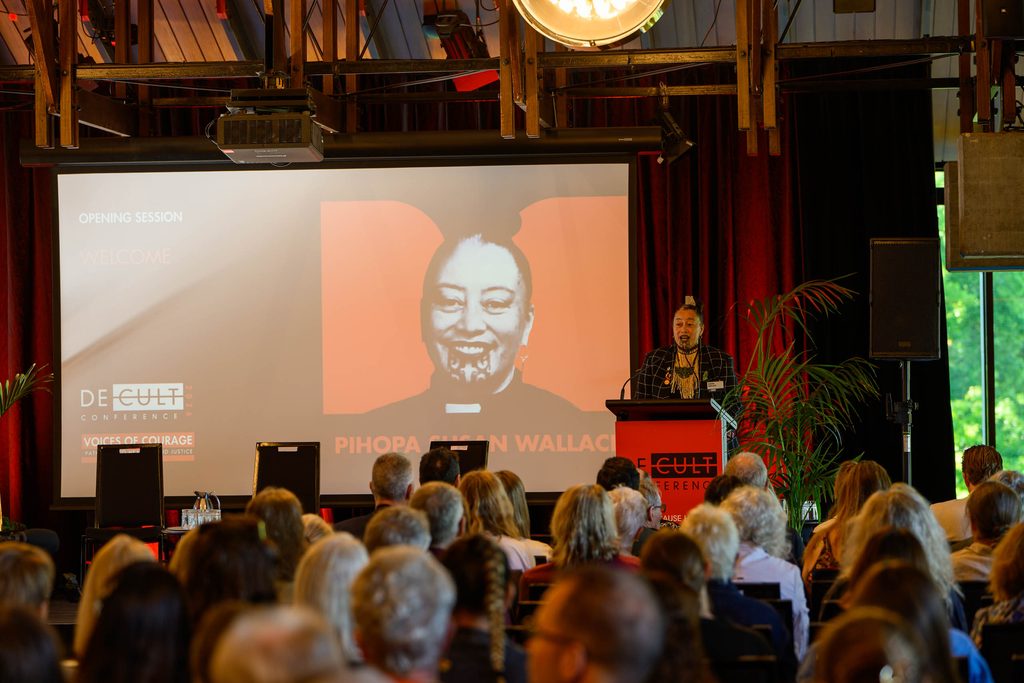
What set this gathering apart from the sensationalised, voyeuristic circus that usually passes for cult reporting was the total absence of esoteric pretence. In mainstream media, cults are treated as freakish sideshows: bizarre theologies, apocalyptic melodramas, or the theatrical antics of megalomaniacal gurus. At Kilmore Street, that voyeuristic lens was dismantled from the opening moments. Māori Anglican Bishop Susan Wallace opened our hui by grounding our collective purpose not in the intellectual autopsy of strange doctrines, but in a community-wide moral imperative: healing, justice, and restorative care after deep institutional and spiritual betrayal.
When former members of Gloriavale, the Exclusive Brethren, Falun Gong, the Truth (the Two by Twos), Jehovah’s Witnesses, Centrepoint, and modern tantric therapy outfits crossed paths in the atrium, there was no need to explain the subtext. We already understood the common denominator: high-demand groups do not merely enforce rigid beliefs; they systematically colonise personal autonomy, short-circuit basic developmental milestones, and violently alienate the human nervous system from its own instincts.
Stepping into this arena wearing the dual hats of a featured speaker and a boots-on-the-ground volunteer produced an immediate, rather vicious paradox. To advocate publicly for survivor recovery while your physical body is actively waging an internal civil war requires confronting the real biological invoice of survival. Formulating intellectual frameworks about coercive persuasion in the abstract is tidy enough; navigating the frontline when thirteen years of high-control dogma and the physiological fallout of trauma are actively demanding their unvarnished pound of flesh is an entirely different proposition.
The Biological Toll: Volunteering with a Rebellious Body
Long before I took the stage on Sunday morning, my personal experience of Decult 2026 was defined by an uncompromising wrestling match with chronic illness. For those of us who have lived through prolonged psychological, spiritual, and physical coercion, trauma does not evaporate into thin air the moment you walk out the door. It embeds itself straight into the marrow, expressing itself through fibromyalgia, post-exertional crashes, and relentless sensory hyper-reactivity.
My volunteer duties on the conference floor were thoroughly unglamorous and deeply grounding. I stood in the arrival hall welcoming people as they stepped through the glass doors, watching the profound trepidation in their eyes. For many, simply walking into a public building with the word Decult plastered across the banner was an act of extraordinary defiance: the first time they had ever dared to stand in broad daylight and acknowledge what had happened to them. Directing nervous leavers towards registration, handing out programmes, steering overwhelmed attendees towards the quiet support spaces staffed by trauma counsellors, and putting out logistical spot-fires were simple tasks, yet they demanded a level of biological voltage my body was scarcely equipped to supply.
By midday on Saturday, the fluorescent tubes, the constant logistical troubleshooting, and the dense emotional atmosphere of hundreds of trauma survivors began to trigger a severe physiological crash. My shins started that sickening, carbonated fizzing unique to a fibromyalgia flare, and my lower spine felt as though someone had poured quick-drying concrete between the vertebrae. This was the physical dividend of decades spent in environments where personal physical limits were condemned as spiritual weakness. In high-control systems, the physical container is treated as utterly expendable in service of the grand mission. In the survivor advocacy space, the constant trap is that we unconsciously replicate that exact same pattern of somatic self-destruction under the noble banner of the cause.
I survived the weekend only through the fierce, unwavering care of my partner. Recognising that my nervous system was redlining, she stepped into the breach: chauffeuring me between venues, buffering me from administrative panic, and aggressively protecting my boundaries around rest. During the lunch break on the first morning, the crushing fatigue dragged me down so hard that my eyes could barely track the corridor signage. I had to leave the Town Hall, retreat to her home, and collapse into bed for a two-hour sleep just to salvage enough neural bandwidth to stand upright for the afternoon. That evening, as attendees and speakers gathered for the official conference dinner, I had to confront the unvarnished limits of my physical machine: I skipped the dinner entirely, crawling beneath the duvet in a darkened room to hoard whatever biological voltage remained for the following day’s panel presentations.
Dismantling the Sacred Cow: Double-Lotus, Bipolar II, and Ascetic Compliance
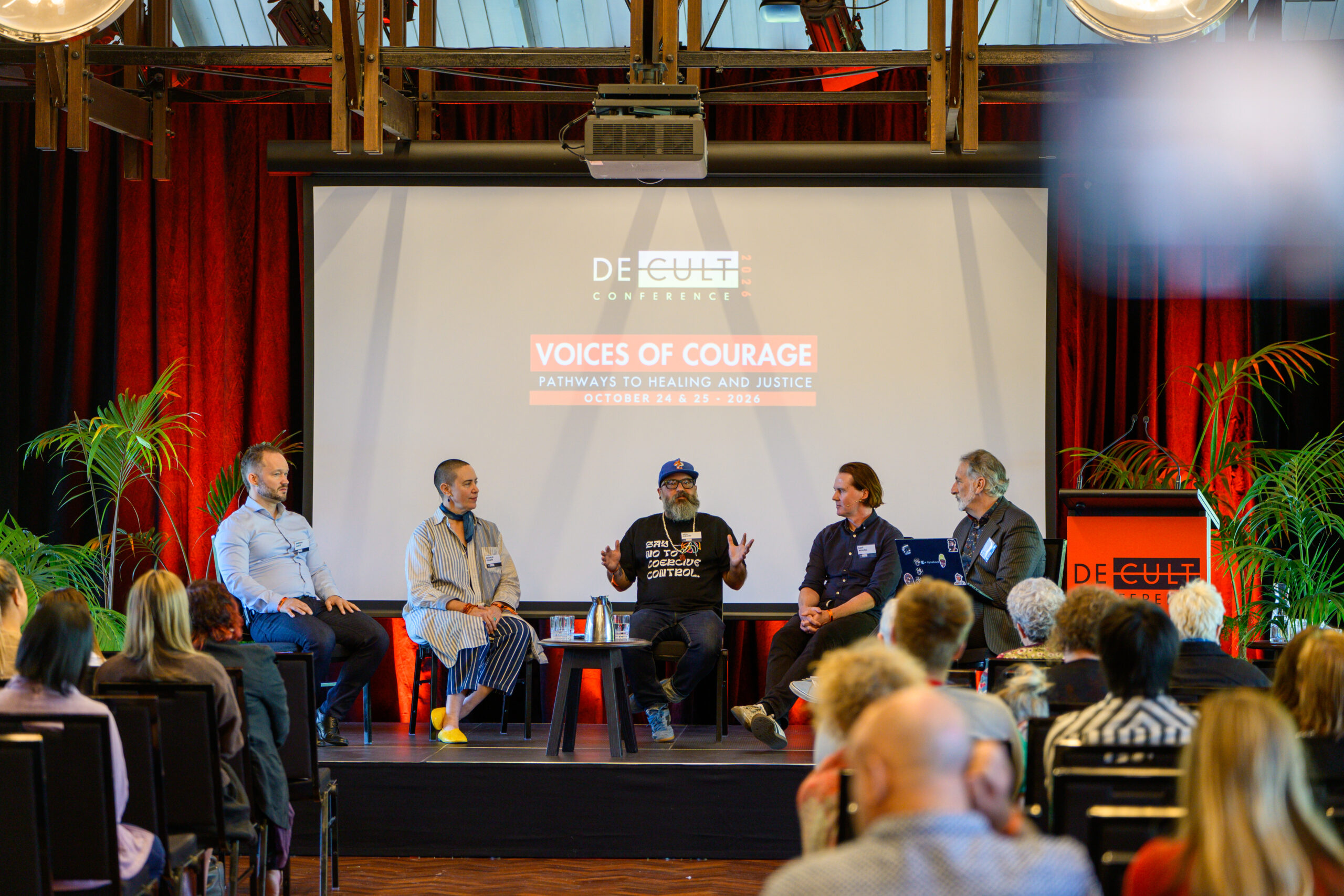
Sunday morning brought my primary engagements on the stage, beginning with a panel dissecting the dark underbelly of spiritual cults, Eastern esoteric movements, and meditation. When my turn came to speak, I discarded polite euphemisms and took a surgical scalpel to one of alternative culture’s most untouchable sacred cows: the unquestioned dogma that ascetic meditation is an inherently benign and universally healing technology.
Drawing directly from my lived experience within Falun Gong, I laid bare the physical and psychological coercion engineered into the group’s mandatory double-lotus posture. In its public relations campaigns, Falun Gong presents itself as a gentle, serene discipline of mind-body cultivation anchored in truthfulness, compassion, and forbearance. Behind closed doors, however, sitting in the full double-lotus position for hours on end functions as an excruciating compliance drill.
Adherents are indoctrinated to believe that the agony ripping through their knees, hips, and ankles is not a biological warning of tissue and joint damage, but the literal combustion of karma. Pain is spiritualised and reframed as purification; physical suffering becomes the spiritual currency required to buy celestial salvation. To uncross your legs before the timer chimes is branded a moral failure, an indulgence of demonic interference, and a cowardly betrayal of the Master. The technique does not cultivate peace; it systematically trains the devotee to dissociate from their physical container and override their own somatic alarm systems. Once an organisation succeeds in teaching you to distrust your own physical agony, you have surrendered the foundational instinct required to recognise and resist abusive control.
The cruelty of this doctrine was weaponised further by the sect’s absolute delegitimisation of mental health. For over a decade, I navigated my involvement with undiagnosed, unmedicated Bipolar II disorder. Within the doctrinal universe of Falun Gong (as in so many high-demand esoteric movements), psychiatry and neuroscience are dismissed as corrupt, Western, materialist delusions. Neurodivergence, clinical depression, and hypomania do not exist as medical realities; they are classified as demonic interference, spiritual filth, or karmic debt carried over from past lifetimes. Seeking psychiatric help or taking prescribed medication is treated as spiritual apostasy that halts the purification of your body.
Forcing a hypomanic, unmedicated brain to sit on a cold timber floor and silence itself is an objective physiological impossibility. When the racing thoughts inevitably refused to stop, the system offered only one verdict: your heart is impure, you lack sufficient faith, and you are clinging to selfish human attachments. The meditative technique was rigged to produce failure, and that failure was weaponised to instil chronic self-loathing. Convinced that my neurochemical symptoms were moral defects, I clung even harder to the very ideological machinery that was destroying my sanity.
Dismantling this dynamic on stage before an audience of survivors, clinicians, and researchers was not just personal catharsis; it was a clinical necessity. Authentic cult recovery demands that we drag these sacred esoteric practices out of the realm of metaphysical romance and examine them under the clear, secular light of neurology and medicine. Professional psychiatric care, accurate diagnosis, and appropriate medication are not spiritual failures; they are the vital somatic scaffolding that allows an abused nervous system to regulate, heal, and begin the untidy work of rebuilding an authentic self.
Frontline Recovery: Lessons from Uncult and Unspun
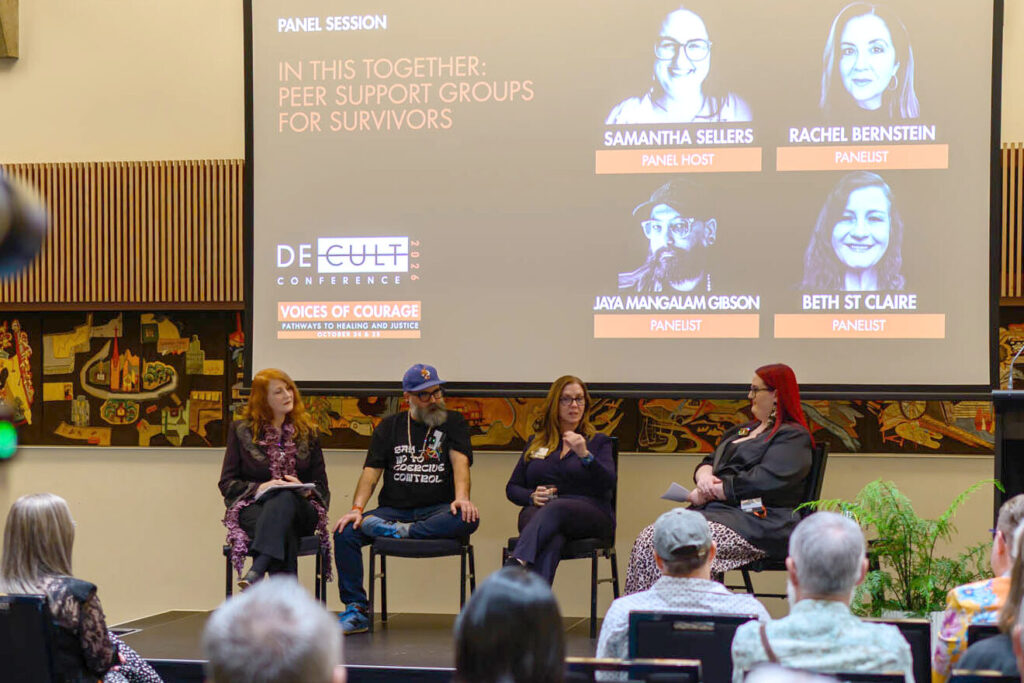
Later that afternoon, I returned to the stage alongside internationally recognised cult recovery specialist Rachel Bernstein, host of the IndoctriNation podcast, and fellow survivor-advocates for a panel addressing the gritty realities of running peer support networks. This conversation shifted the focus from the post-mortem of harm to the practical engineering of recovery.
Grassroots recovery infrastructure in Australasia has historically been starved of resources, professional recognition, and systemic support. Drawing directly on our experience establishing Uncult (Aotearoa New Zealand’s first dedicated in-person peer support group for cult leavers) and the dozens of survivor journeys documented alongside my co-host Alisa Woodruff on our podcast, Unspun, we examined the non-negotiable principles required to build durable, trauma-informed recovery spaces.
The most acute danger facing a recent cult leaver is the psychological craving for certainty. Having lived in an environment where every relationship, decision, and philosophical question was decided by authoritarian decree, leavers frequently experience “cult hopping”: trading a fundamentalist church for an authoritarian political movement, a commercial multi-level marketing pyramid, or a hyper-controlling tantric retreat. Authentic peer support must actively resist the urge to provide easy answers. It must provide an ideological blank canvas where ambiguity, disagreement, and not-knowing are welcomed as proof of psychological health.
That is why communal recovery spaces must remain strictly secular and non-dogmatic. While individual survivors hold an absolute right to explore spiritual traditions or personal philosophies on their own terms, the collective space must never validate spiritual bypassing, magical thinking, or metaphysical hierarchies over observable reality.
For survivors who were born into high-control groups or recruited in early adolescence, there is no pre-cult self waiting to be dusted off. They are not recovering an old identity; they are constructing a human self for the very first time. Peer support must provide a safe, shame-free space to navigate the mundane realities of the outside world: learning to set interpersonal boundaries, building financial literacy, navigating medical appointments, and unpicking the loaded language that once held their minds hostage.
We also wrestled deeply with the agonising dilemma facing families with relatives still trapped inside high-demand groups. Decades of collective advocacy and clinical practice establish that direct, combative confrontation almost always backfires. Staging high-pressure interventions or launching into aggressive debates typically triggers the group’s persecution complex, driving the loved one deeper into the insular safety of the fold. Sustainable family support requires keeping quiet, low-friction relational lifelines open: validating their human emotions without validating the group’s dogma, reflecting their authentic values back to them, and consistently communicating one clear message: when and if the day comes that you choose to walk away, you have a safe, non-judgemental landing pad waiting for you, and your bridges here will never be burned.
The Ten-to-One Disparity: Gender and the Silence of Men
During the interactive audience discussions, looking out from the elevated stage across the raked seating of the Town Hall revealed a visual metric that was impossible to ignore. I leaned into the microphone and pointed it out directly: the audience of survivors, family members, clinicians, and community allies was overwhelmingly female, outnumbering men by roughly ten to one.
This demographic imbalance was neither an accident nor a statistical fluke. It was an accurate reflection of the deeply gendered reality of coercive control. High-demand groups, regardless of their superficial theological or philosophical branding, operate as hyper-patriarchal hierarchies where the heaviest extractive burden is systematically dumped onto women and girls.
Whether through fundamentalist purity culture that enforces domestic submission, childbearing, and uncompensated physical labour, or through “sacred sexuality” retreats where women are groomed into sexual availability for male gurus under the guise of spiritual healing, women bear the catastrophic brunt of cultic exploitation. It is women who carry the shattered boundaries, the financial destitution, and the reproductive trauma. Consequently, it is women who do the courageous, agonising work of seeking help, building community, and speaking out.
Yet the unspoken tragedy of that ten-to-one ratio lies in what it reveals about the men who were absent.
Our cultural conditioning teaches men that emotional distress is a character defect, that admitting to victimisation is unmasculine, and that falling prey to manipulation is proof of stupidity. For a man who has exited a high-control group, admitting that his mind was manipulated, his money extracted, or his autonomy violated strikes at the very core of his patriarchal identity. Furthermore, men inside high-demand groups are routinely co-opted into acting as the movement’s junior enforcers: elders, monitors, and disciplinary agents. Upon leaving, they often carry crushing burdens of unexamined guilt, moral injury, and shame.
Unable or unwilling to access peer recovery spaces, many male leavers retreat into emotional isolation, cynicism, chronic anger, substance abuse, or silent despair. Cult recruitment does not target the weak or the foolish; it targets universal human needs for connection, purpose, and community. Creating spaces where male survivors can safely drop their stoic armour, untangle moral injury, and process systemic manipulation without fear of ridicule remains one of the most critical frontiers of our work.
The Architecture of Truth: Voices from the Floor
The genuine strength of Decult 2026 was its seamless integration of academic keynotes, clinical evidence, and raw survivor testimony.
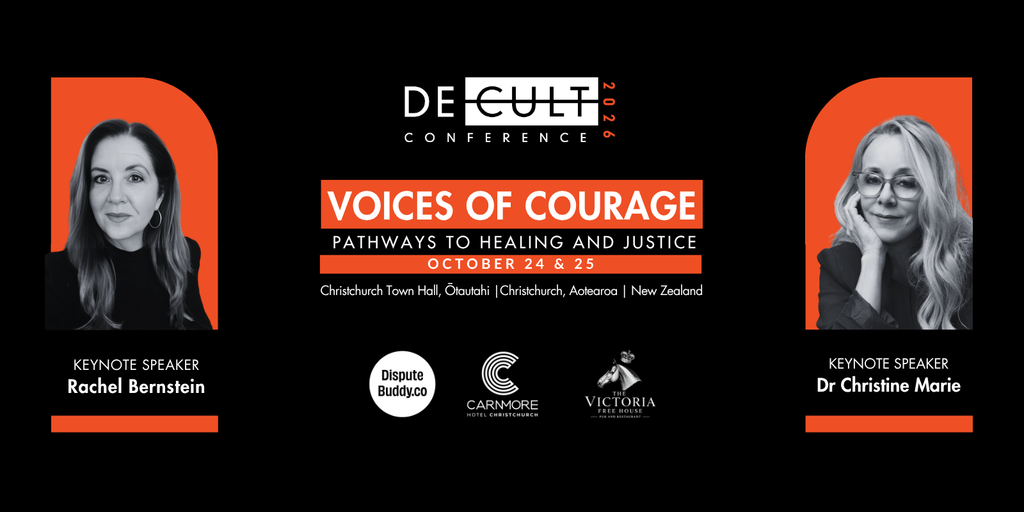
Opening keynote speaker Rachel Bernstein set the intellectual tone of the weekend with her presentation on The Price of the Promise: The Conversion/Inversion Framework. She dissected the subtle, imperceptible shift that occurs when high-control groups reel recruits in with radiant promises of belonging, enlightenment, or purpose, only to steadily execute an inversion: the gradual surrender of personal intuition, boundaries, and critical faculties in exchange for conditional group approval. Recovery, Bernstein reminded us, requires learning to sit safely in the discomfort of not-knowing and cultivating the courage to stop evaluating oneself through the eyes of people who never truly saw you.
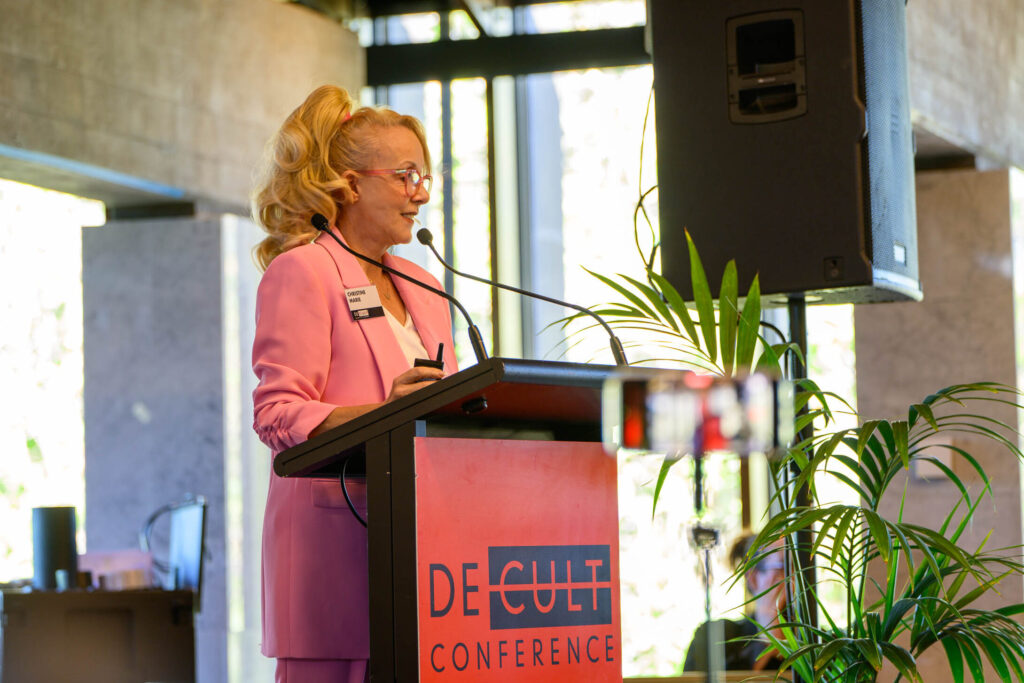
On Sunday, Dr Christine Marie, founder of Voices for Dignity, delivered a devastating keynote examining the psychological mechanics of coercive control through the lens of her media psychology research and her personal escape from high-demand polygamy. Her central thesis resonated across the auditorium: the invisible psychological chains constructed through gaslighting, isolation, and manufactured dependency are frequently far more binding than a physical gun pointed at a victim’s head.
The systemic public health consequences of these dynamics were starkly underscored by Dr Kyle Eggleton, an ex-member of the Two by Twos and Associate Professor of General Practice at the University of Auckland. Presenting hard epidemiological data on The Hidden Death Toll: When Cults Cause Suicide, Dr Eggleton shared that an alarming 38 percent of cult survivors experience active suicidal ideation (compared to between 2.4 and 5.3 percent in the general New Zealand population), while an estimated 59 percent meet the clinical criteria for Post-Traumatic Stress Disorder. These figures laid bare what advocates have long argued: coercive control in high-demand groups is not a marginal religious curiosity, but a full-blown public health crisis that demands urgent statutory and clinical intervention.
This analytical foundation was enriched by sessions addressing the long, non-linear architecture of healing. Liz Sallows delivered a lucid, deeply moving breakdown of The Grief of Leaving, illuminating the multi-layered bereavement survivors must navigate: the grief of what was left behind (community, certainty, and an all-encompassing identity); the grief of what was denied (authentic developmental milestones and the ability to trust one’s own instincts); the grief of what was done (the agonising burden of moral injury, realising the ways one was coerced into complicity with the group’s harmful agenda); and the grief of what was stolen (the lost years, the unpursued educations, and the foregone financial stability sacrificed on the altar of the cause).
Echoing this focus on self-possession, Andrew Jasko’s exploration of religious trauma examined how high-control theology dismantles the self by teaching adherents to distrust their own intellect, intuition, and somatic signals. Jasko emphasised that authentic recovery requires cultivating an internal locus of control, establishing oneself as the sole, sovereign authority in one’s own life.
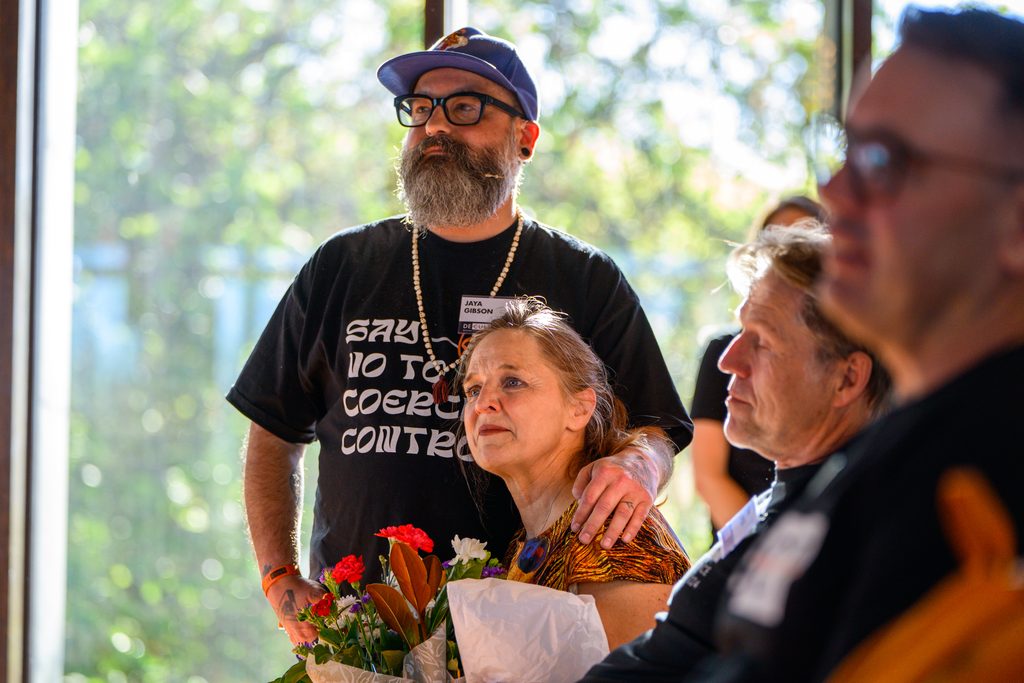
The emotional culmination of the entire weekend arrived during the Sunday afternoon plenary. Standing on the stage under the auditorium lights, I was given the profound honour of presenting Anke Richter with a massive bouquet of flowers on behalf of the Decult Trust team, the volunteers, and the assembled survivors.
Anke’s tireless, visionary determination (sparked by the groundbreaking investigative journalism in Cult Trip, fuelled by her work founding the Decult Trust, and forged through the success of the inaugural 2024 conference) has completely transformed the cult awareness landscape in Australasia. In a country where survivors historically wandered as isolated, invisible refugees, Anke has built an enduring international platform for truth-telling, policy advocacy, and community support. Standing beside her, witnessing the standing ovation from hundreds of people who had found their voices and reclaimed their dignity, the physical exhaustion of the weekend dissolved into an overwhelming sense of shared triumph.
The Radical Dignity of the Mundane
The ultimate triumph of Decult 2026 was not that it peddled easy solutions or handed down a shiny new doctrine to replace the old. Its greatest triumph was its profound, radical validation of the mundane.
For those of us who spent formative years immersed in high-stakes, apocalyptic, or transcendental movements, secular reality can initially feel terrifyingly flat. Cults train their adherents to believe that every thought carries cosmic significance, that they are fighting on the frontlines of a grand universal struggle, and that ordinary society is a corrupt, meaningless wasteland. Stepping out of that intoxicating matrix often leaves the leaver standing in a disorienting, deafening silence.
What Decult proved is that genuine freedom does not lie in striving for cosmic transcendence; it lies in coming home to our ordinary, messy, finite humanity.
Freedom is the hard-won dignity of living in the real world. It is the freedom to honour a chronically ill body, prioritising rest without feeling that physical exhaustion is a moral or spiritual failure. It is the freedom to seek clinical psychiatric support and take prescribed medication for neurochemical imbalances, entirely liberated from the terror of demonic retribution. It is the freedom to sit in a room full of fellow human beings, openly admit that you do not have all the answers, and be met with unconditional acceptance rather than ideological correction. And it is the freedom to embrace an uncertain, unscripted existence, building an identity from the ground up on your own terms.
We walked out of the Christchurch Town Hall exhausted, battered by our somatic limits, and carrying the profound emotional weight of the stories shared. But for the first time in our region’s history, survivors of coercive control are no longer walking in the shadows. Through the institutional foundation of the Decult Trust, the community sanctuaries we continue to nurture at Uncult, and the raw, unfiltered conversations we document on Unspun, we are carving out an enduring reality: recovery is real, bodily autonomy is non-negotiable, and the secular world is a beautiful, open place to live.